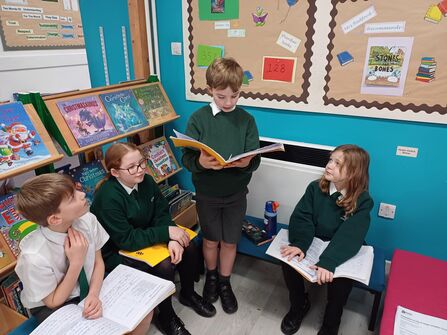

Otterbourne Primary school Y5&Y6 speeches photo 1 ©Craig Whitelock
Split level view of the River Itchen, with aquatic plants: Blunt-fruited Water-starwort (Callitriche obtusangula) Itchen Stoke Mill is visible on the left. England: Hampshire, Ovington, May - Linda Pitkin/2020VISION
Otterbourne Primary school Y5&Y6 speeches photo 1 ©Craig Whitelock
Geography field trip- rivers!
Y5 & Y6 visited Compton Lock to study the River Itchen, Otterbourne's local river. Their Geography field trip, organised by Mrs Clare Holland with Hampshire and Isle of Wight Wildlife Trust, helps reinforce their learning, understanding the importance of a chalk river and delving deeper into what lives beneath the waters surface.
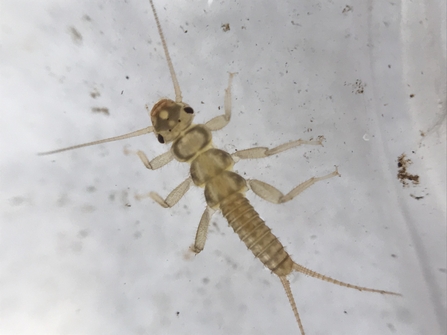
The pupils enjoyed a rotation of activities. Alison Barker (Outdoor Learning Tutor) delivered kick sampling, a method for surveying freshwater invertebrates in shallow, flowing water by agitating the stream bed with your foot to dislodge organisms into a net held downstream. The children observed mayfly and dragonfly nymphs, freshwater shrimp, caddisfly and stonefly larvae and used the biotic index scoring system to work out the water quality of the adjacent stream they were sampling from.
Pleased to report that the score indicated a clean healthy water as there were species such as caddisfly, damselfly and dragonfly nymphs that score 10 and they can only tolerate clean water as they use their gills to breath and therefore require water high in oxygen levels.
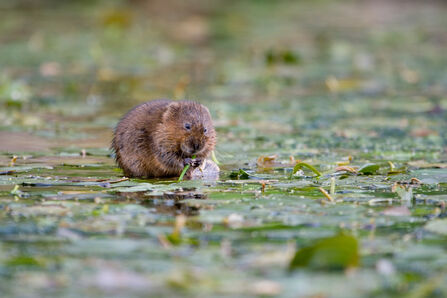
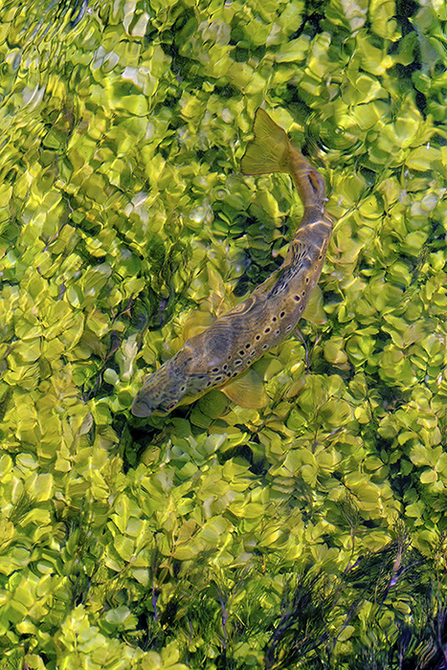
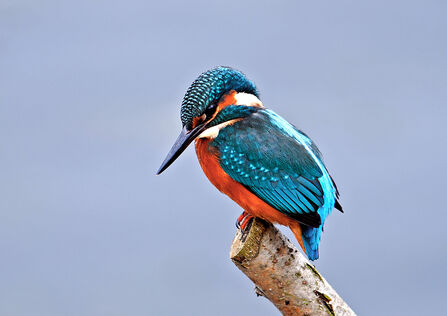
Craig, an Engagement Officer at Hampshire and Isle of Wight Wildlife Trust, talked to the children about the importance of the River Itchen and its characteristic wildlife including the brown trout, which made an appearance, the illusive kingfisher and the iconic water vole.
The children understood what makes this river special, the chalk bedrock. Chalk rock is a porous, sedimentary rock rich in calcite, and chalk rivers are rivers fed by springs from underground chalk aquifers, which result in clear, mineral-rich water that is stable in temperature and flow. This unique, high-quality water makes chalk rivers a rare and vital habitat for a wide variety of aquatic wildlife.
By demonstrating how a sponge soaks up water with it's air pockets being replaced by water, the same applies for chalk rock, with its tiny pores allowing the air to be replaced by water. Making this a good property of chalk, as the chalk bedrock stores the water keeping it at a constant temperature. As the chalk got placed in a bucket of clear river water, the children watched the air bubbles rise to the surface, reinforcing their learning with practical in person observations. They also did a field sketch of a section of the river at Compton Lock observing the man made and natural features, learning key vocabulary.
Water Vole ©Tom Marshall
Brown trout at Bere Mill © Ana Peiró
Stonefly larva © Susan Simmonds
Kingfisher © Ian Cameron-Reid
Staff from school then delivered the third activity, recording river velocity. River velocity is the speed at which water flows, measured by dividing a set distance by the time it takes for water to travel that distance. Children used sticks to help measure the velocity and found the average was 1.55 meters per second. This river velocity is typical of most rivers, faster rivers or during heavy rainfall will go up to 3.1 meters per second.
Understanding river velocity is important because it dictates a river's erosional power, its ability to transport sediment, and the shape of the landscape, directly influencing flood risk, ecosystem health, and water resource management.

Stream adjacent to Compton Lock where the children did their kick sample ©Craig Whitelock
English Speech writing on 'Save our Chalk Stream' campaign
As part of their English speech writing, Mrs Holland thought using a real life topic would make this exercise come to life and be something meaningful for the children to be a part of. Tying in nicely with their Geography fieldwork on rivers.
The Trust leads on the 'Save our Chalk Streams' campaign. This campaign calls on the Government to introduce specific legal protections in planning for our chalk streams, in line with the recommendations of the Catchment Based Approach (CaBA) Chalk Stream Restoration Strategy. Locally, the Trust is campaigning for local councils to adopt River Rights, which recognise that rivers have inherent rights, such as the right to flow, remain free from pollution and support native biodiversity.
The children listened to a talk in school from Craig, all about the importance of chalk rivers and why they need protecting. Understanding the threats this important ecosystem faces and the impacts on our environment and the wildlife that lives there.
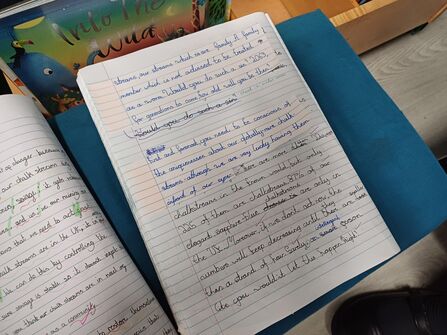
This was also an exercise for pupils to learn how to write good note taking, writing down keywords and pulling out the main points to focus on in their speech content.
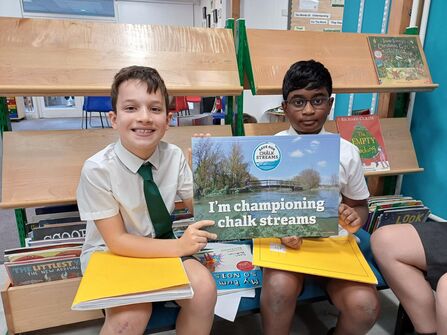
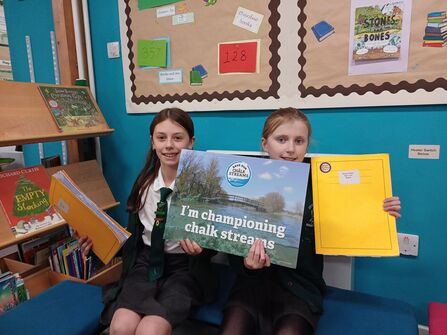
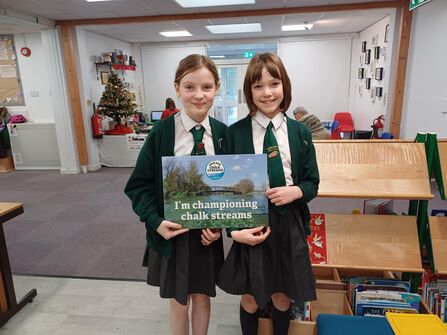
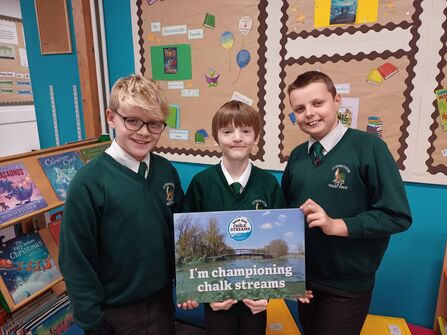
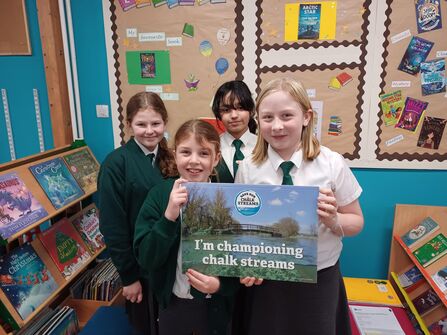
Otterbourne Primary Y5 & Y6 pupils holding save our chalk streams sign photo 1 ©Craig Whitelock
Otterbourne Primary Y5 & Y6 pupils holding save our chalk streams sign photo 2 ©Craig Whitelock
Otterbourne Primary Y5 & Y6 pupils holding save our chalk streams sign photo 3 ©Craig Whitelock
Otterbourne Primary Y5 & Y6 pupils holding save our chalk streams sign photo 4
Otterbourne Primary Y5 & Y6 pupils holding save our chalk streams sign photo 5 ©Craig Whitelock
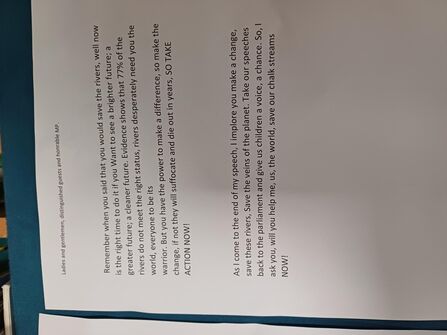
Using all the information gathered and listening to Sir David Attenborough speaking so passionately, the pupils wrote their speeches. Some presented to Craig, and others to their local MP Danny Chambers.
The pupils learnt how to emphasise words, look at the audience with confidence, relate to the person you're speaking too, clear projecting voices and using emotive language to make the audience connect.
The pupils showed clear understanding of the topic in question and the focus of their speech. They said how much they enjoyed learning about chalk rivers and why we need to protect them. They felt like they were helping protect these valuable habitats by persuading others to take action.
This project demonstrates how using an environmental topic can transfer across multiple curriculum subjects, whilst educating are future generation about real life topics.
"This project is a vitally important part of our children's learning. One of our school pillars is 'Sustainability and Change' and our work with Hampshire and Isle of Wight Wildlife Trust helps children to understand the importance of valuing and preserving a precious ecosystem, which they are lucky enough to have on their doorstep. The children wrote passionate speeches to the MP Danny Chambers asking for increased protection for our chalkstreams which allowed them to see themselves as guardians of our planet and change agents. This project has helped them discover the power of their own voices, seen how their ideas can influence real decision-makers, and they now understood that protecting the environment is not just a topic in a book but a responsibility they carry into the future"Otterbourne Church of England Primary School
Otterbourne Primary Y5 & Y6 Speech ©Craig Whitelock
Otterbourne Primary Y5 & Y6 Speech example ©Craig Whitelock
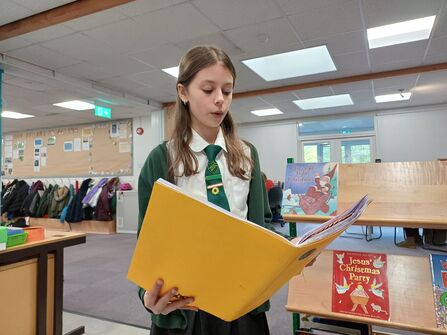
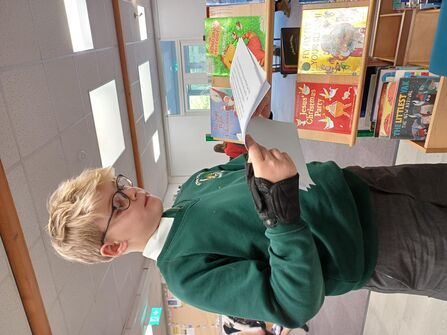
Otterbourne Primary School pupil reading speech ©Craig Whitelock
Otterbourne Primary school pupil reading out speech ©Craig Whitelock
Otterbourne Primary pupil reading speech photo 3 ©Craig Whitelock
At the school, I have the pleasure of giving children stickers and praise when they earn an Outstanding Achievement in their work. This unit of writing has delivered some of the most persuasive writing I've seen in a very long time...and I've had to give out more stickers for the children's speeches than for any other piece of work! The level of interest, that was raised due to the time and support given to the children by Hampshire and Isle of Wight Wildlife Trust (and especially Craig) and by a visit by Danny Chambers MP, and the real-life issues that the children discussed and included in their writing, will hopefully mean that they value and respect our chalk streams for years to come.
Otterbourne Church of England Primary school

Wilder School Conference 2024 pond dipping with teachers ©Craig Whitelock
If you have been inspired by Otterbourne Primary School project and are interested in finding out more about Wilder Schools and how we could support your school, please follow the link below.
We have opportunities for every school no matter how far along you are on your outdoor journey, or how big your grounds are, we offer support to both primary and secondary and can tailor the package to the requirements of the school and its pupils.
As well as paid packages you can become a Wilder School for free and be supported through resources, advice and support from a network of schools taking action.
We can all do it better together!