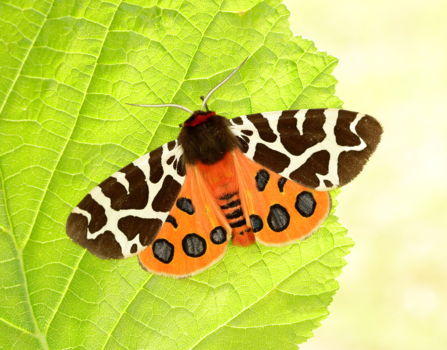

Emerging on warm summer nights, the garden tiger appears almost ordinary at first glance, with chocolate-brown forewings patterned in cream and white. But when disturbed, it reveals a spectacular flash of bright scarlet-red hindwings marked with bold black spots – a vivid warning to predators that this is not an easy meal.
Once a familiar sight across much of the UK, the garden tiger moth has declined significantly in recent decades as habitats have been lost or tidied up, and is now recognised as a Priority Species for conservation. It thrives in places that can sometimes look a little untidy to us: wildflower-rich grasslands, woodland edges, hedgerows, wetlands, coastal dunes and overgrown corners of gardens.
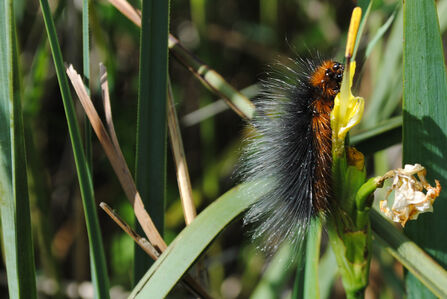
Its caterpillar is almost as famous as the adult moth. Known as the ‘woolly bear’, it is covered in dense black and ginger hairs and can often be seen from late summer through to spring. These furry caterpillars feed on a wide variety of plants, including nettles, docks and other common wildflowers, helping them survive in a range of habitats.