
Few insects command attention quite like the European hornet. Large, loud and boldly marked, they can appear fearsome at first glance, yet despite their appearance they are often misunderstood. Far from being a creature to fear, the European hornet is a valuable part of our natural world: a pollinator, a predator and a gardener’s friend.
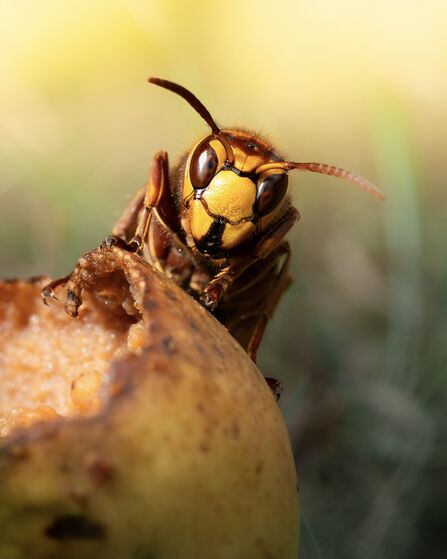
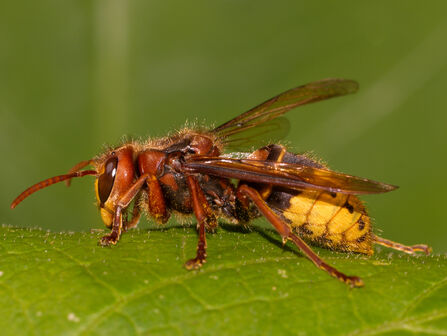
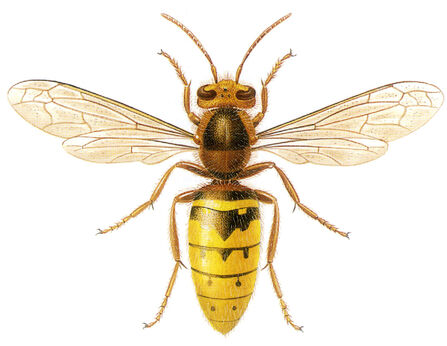
The European hornet is the UK’s only native hornet and is significantly larger than the common wasp. Its distinctive appearance is designed to signal danger: a yellow abdomen crossed with black stripes, a yellow and red head and a reddish-brown thorax. This bold colouring is so effective as a warning signal that other harmless insects, including the hornet moth and hornet mimic hoverfly, have evolved to mimic it.
Despite their appearance, they are far less aggressive than common wasps and are unlikely to sting if left alone. In fact, they’re often considered to be ‘gentle giants’, far more interested in feeding and hunting than bothering us. They will, however, defend their nest if threatened.