
Though widespread and common across the UK, its life is shaped by remarkable adaptations which show how remarkable even our familiar wildlife can be.
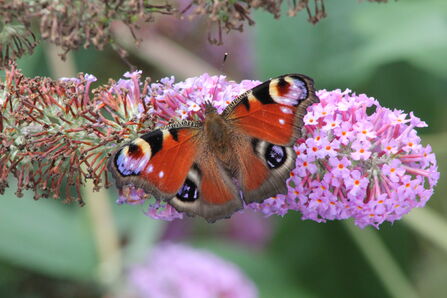
With its vivid red wings and unmistakable blue ‘eye’ markings, the peacock is a true showstopper. Its spectacular wing pattern is also one of its most effective survival tools and a clever defence mechanism. When threatened by birds or small mammals, the peacock flashes its wings open, revealing the dramatic eyespots in a sudden, startling display. It can even produce a soft hissing sound by rubbing its wings together, another useful deterrent to would‑be predators.
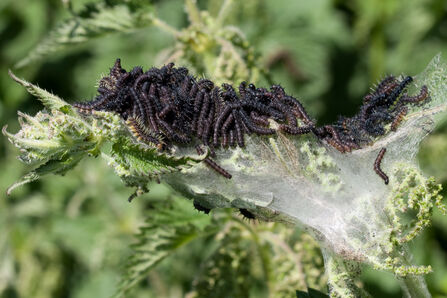
Their caterpillars are equally distinctive - velvety black with tiny white speckles and short, shiny black spines. They are almost always found on stinging nettles, which are the preferred food of this species’ larvae. After mating in early spring, females lay large clusters of eggs, sometimes up to 500, on young nettle leaves in May. Within a couple of weeks, the caterpillars hatch and initially live communally, spinning a protective silk web and feeding together before gradually dispersing as they grow. By July, they pupate, emerging as adult butterflies later in the summer, typically between July and August.