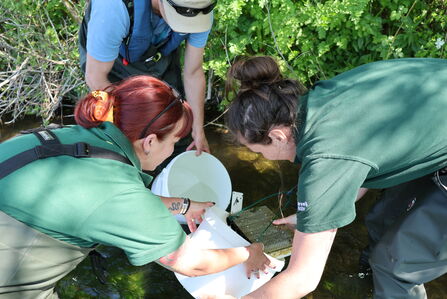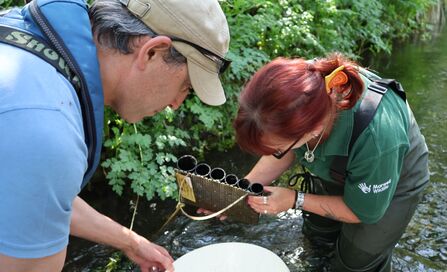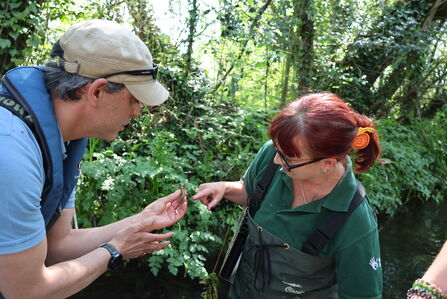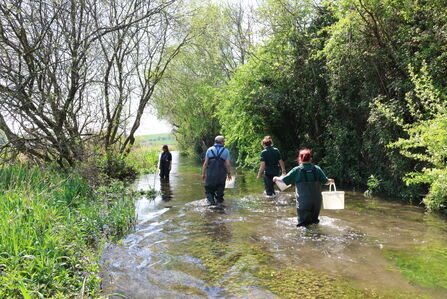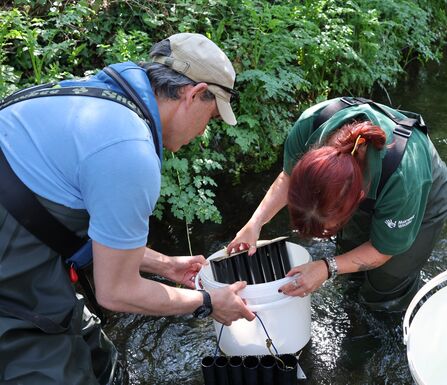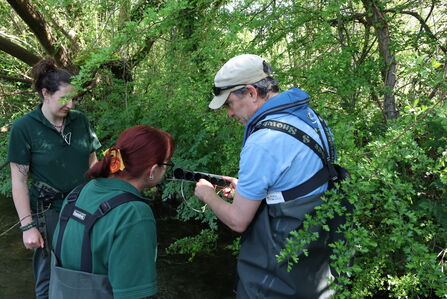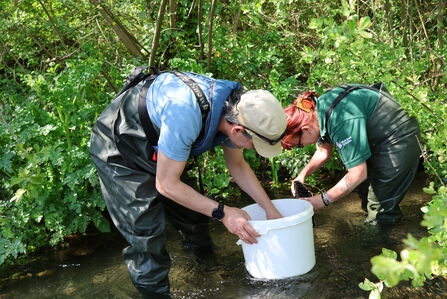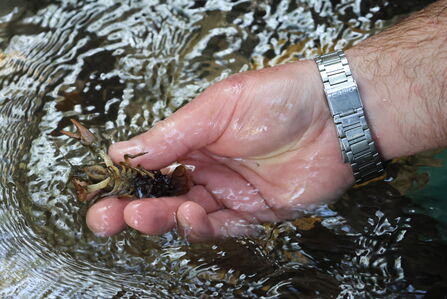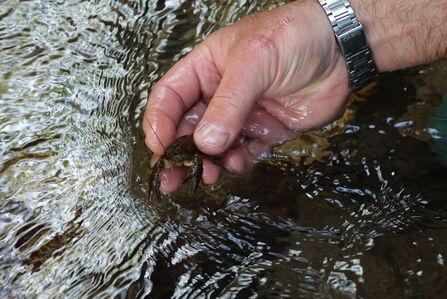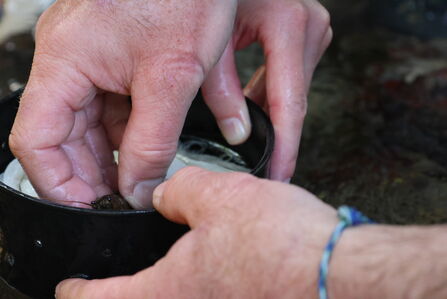
After being cared for at Marwell’s Native Species Zone, the crayfish have been released into the upper reaches of the River Itchen, to supplement Hampshire’s last remaining stronghold for the species. This forms a critical part of work led by Hampshire & Isle of Wight Wildlife Trust to secure the long-term survival of the species in the county.
This latest release builds on more than a decade of captive rearing and release work with Bristol Zoological Society, which has seen white-clawed crayfish released to the headwaters of the River Itchen to extend and strengthen our wild population. The addition of a dedicated facility in Hampshire expands this work further, enabling more localised conservation of the species.
Once widespread across Hampshire’s rivers, white-clawed crayfish (Austropotamobius pallipes) have suffered dramatic declines over recent decades due to pollution, habitat loss and most critically the spread of the invasive non-native signal crayfish, which carry the deadly ‘crayfish plague’.
Dr Ben Rushbrook, Principal Ecologist at Hampshire & Isle of Wight Wildlife Trust, said: “Seeing white-clawed crayfish released to a Hampshire chalk stream is something that really stays with you. This release marks an important step forward, helping give this species a real chance by increasing the resilience of this population, so it’s incredibly rewarding to see them back in the wild.
“For nearly 20 years we’ve been working to give this species a fighting chance, not just by supporting captive rearing and release efforts, but by monitoring, protecting and restoring the important habitats and clean rivers and streams they need to survive and thrive.”
The work forms part of a long-term partnership between the Trust, Marwell Zoo, Bristol Zoological Society and Wildheart Trust on the Isle of Wight to secure the future of this species across the two counties.
Ben adds: “It is significant to have a Hampshire base, alongside our established conservation partners in Bristol. With Marwell now part of that network, which also includes a facility on the Isle of Wight, we’ve got a stronger, more secure springboard for protecting our existing population(s) and creating successful ark sites across the county. That gives me real hope for the long-term survival of white-clawed crayfish in Hampshire.”
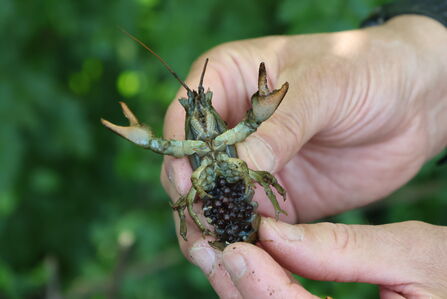
As part of this ongoing conservation work, a carefully managed cycle of collecting egg-bearing ‘berried’ females from chalk rivers and streams takes place each year. The eggs and young are raised in captivity to boost survival rates, before being released to supplement the existing population in that river or stream. In the future, we hope to release some of these captive born individuals to create new ark sites.
This year, four berried females have been collected from one headwater of the River Itchen, and are being reared at Marwell’s facility, where their young can develop safely before release, increasing their chances of survival in the wild. The Trust also continues this work in partnership with Bristol Zoological Society, where larger numbers are reared from another headwater as part of the long-established programme.