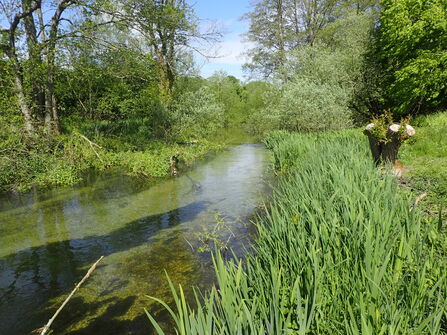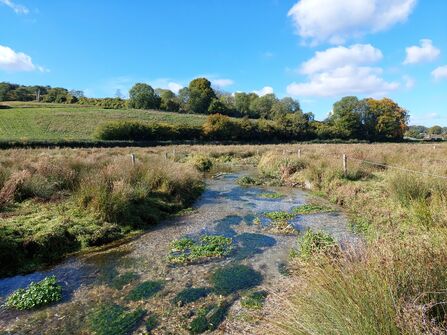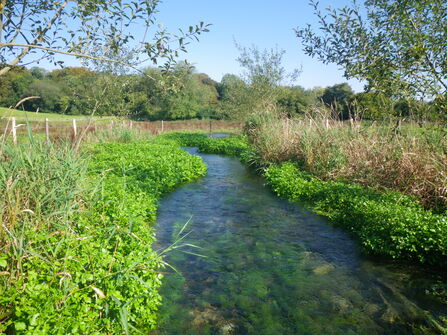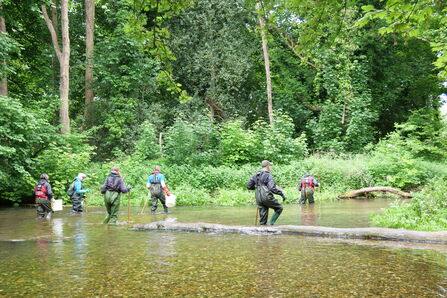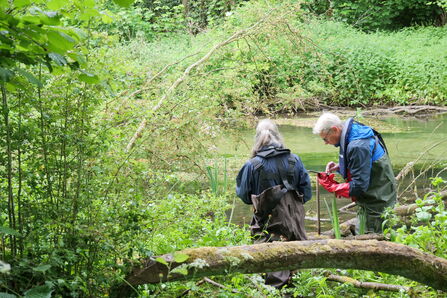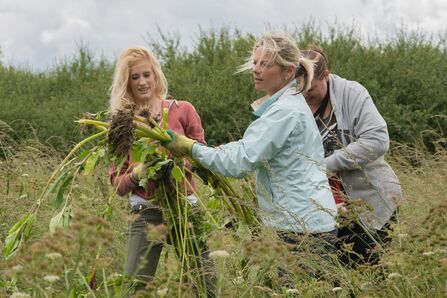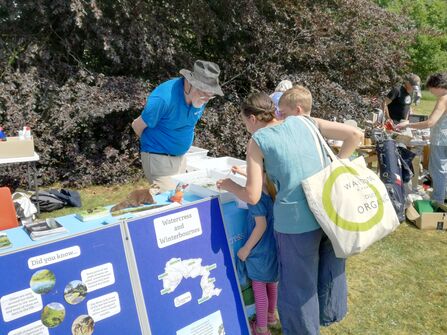
Chalk streams are among the world’s rarest freshwater habitats. Fewer than 200 exist globally, and 80% of these endangered rivers are located in Southern England. At the headwaters of the Rivers Test and Itchen, they rise as clear chalk springs, feeding meadows and wetlands before winding through villages, farmland and historic towns.
These delicate rivers support extraordinary wildlife, from water voles and trout to kingfishers and a rich diversity of invertebrates. Yet years of pressure (from pollution, sedimentation, invasive species and barriers to fish passage) have placed many chalk streams under threat.
Funded by the National Lottery Heritage Fund and delivered in partnership with 16 organisations, Watercress & Winterbournes set out to reverse these trends through a community-focused catchment approach: restoring habitats while inspiring and equipping people to become long-term stewards of their rivers.
Originally planned as a five-year programme, the scheme was extended by an additional year following delays caused by the COVID-19 pandemic, allowing even more to be achieved on the ground and strengthening its long-term legacy.
Restoring chalk streams at their source
Led by Wessex Rivers Trust, with support from the Wild Trout Trust and local partners, the project delivered an ambitious programme of targeted restoration works, focusing on headwaters where small-scale intervention can deliver benefits across entire catchments.
Over six years, Watercress & Winterbournes delivered:
• 5 kilometres of chalk stream habitat improved, with more than 4 kilometres renaturalised, restoring natural flow, structure and resilience
• 22 habitat enhancement schemes, including channel re-meandering, bank regrading, woody material installation and floodplain reconnection
• 12 sediment mitigation schemes, delivered in partnership with landowners to reduce fine sediment – one of the most damaging pressures on chalk stream headwaters
• 2 fish passage schemes, removing artificial barriers and reconnecting fragmented habitats for fish and other wildlife
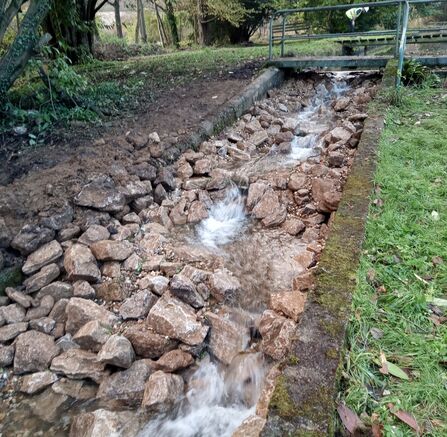
One flagship project saw the replacement of an impassable stepped concrete channel with a new rock ramp on the Bourne Rivulet at the Saw Mill, opening up three kilometres of upstream habitat for migrating fish. Vegetation has flourished alongside the restored channel, with clear ecological benefits visible within a year of completion.
On the Cheriton Stream at Tichborne, restoration addressed an overly wide, straightened reach that had accumulated silt due to slow flows. In 2022, staff and volunteers worked with Portsmouth Services Fly Fishing Association to install woody berms that trap sediment, narrow the channel and restore a more natural chalk stream form, speeding up flows and improving habitat quality.