
Sunshine and speckled wings

Find out about the speckled wood butterfly, what it looks like and where to see it.

One of the easiest butterflies to spot during the summer months is the speckled wood. Gliding through dappled sunshine along woodland paths, hedgerows and shady garden corners, this attractive butterfly is a familiar sight across Hampshire and the Isle of Wight.

Unlike many butterflies that favour open meadows, the speckled wood thrives in areas where sunlight filters through trees and shrubs. Woodland rides, forest edges and leafy lanes provide ideal conditions, creating patches of light and shade where adults can feed, bask and search for mates.

The speckled wood is a medium-sized butterfly with a wingspan of around five centimetres. It can be recognised by its rich brown wings marked with creamy yellow spots and distinctive eyespots. These markings help distinguish it from other brown butterflies and make it one of the easiest woodland species to identify.
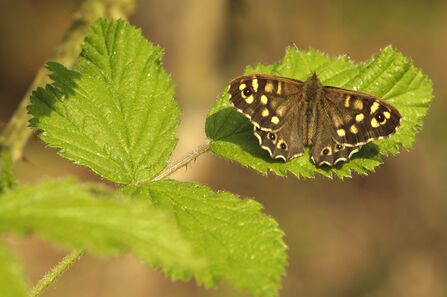
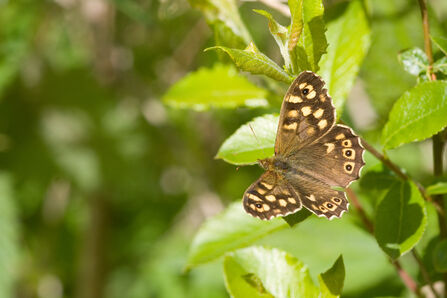
Summer is one of the best times to see speckled woods. They are on the wing from March to October and produce two or three broods each year. During warm weather, males can often be seen defending sunny patches of woodland, perching in a favourite spot before darting out to challenge passing butterflies. This territorial behaviour is one of the species' most fascinating characteristics and can provide a wonderful wildlife spectacle when enjoying a countryside walk.

While many butterflies rely on nectar-rich flowers, speckled woods often feed on honeydew, a sugary substance produced by aphids on trees and shrubs. Their caterpillars feed on a range of grasses, including cock's-foot, growing in woodland clearings and along hedgerows. 

Although the speckled wood remains a common butterfly, it has faced declines in some areas. At the same time, its range has expanded northwards in Britain, reflecting changing environmental conditions. Its adaptability has helped it colonise new areas, bringing a touch of wild woodland life closer to where people live.