
Golden plover’s seasonal disguise

Discover how golden plovers swap their striking summer plumage for subtle winter camouflage. Look out for these seasonal visitors along Hampshire’s coast, where swirling flocks and distinctive calls bring winter landscapes to life.

As the days grow shorter, one of the UK’s most striking wading birds, the golden plover (Pluvialis apricaria), undergoes a drastic transformation, swapping shimmering gold breeding plumage for muted camouflage colours that are crucial for survival.

During the summer breeding season, the golden plover typically nests on moorlands in Scotland and northern England, where their striking gold and black plumage is used to attract a mate. But as autumn arrives, many leave these northern breeding grounds and head south, bringing these beautiful birds to lowland and coastal areas, including here in Hampshire.

Here, they need to blend in, so their conspicuous summer coats make way for a softer palette of brown and buff, with just a smaller smattering of gold surviving the transformation. This subdued colouring helps conceal them among coastal mudflats and frost-covered grassland from predators such as the peregrine falcon and sparrowhawk.
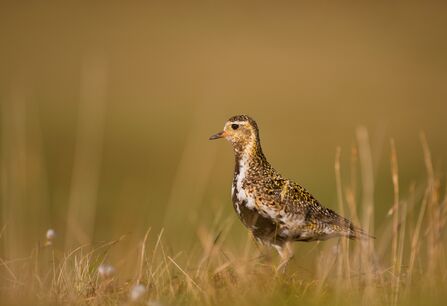
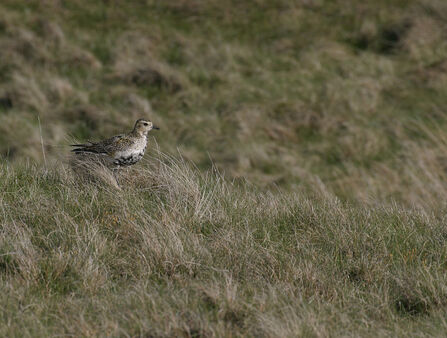
During these colder months, the golden plover will gather in large numbers, spending much of the day standing quietly, scanning their surroundings. At the first hint of a threat, the flock can rise in a sudden ‘dread’, wheeling through the sky in a swirling, tight-knit formation. 

When it is safe to feed, they scour the ground for insects, beetles and worms, often in the company of lapwings. Like other plovers, golden plovers have particularly large eyes in relation to the size of their heads, which helps them see in low light. This makes them well adapted to feeding at dusk and after dark, and especially beneath a full moon, when worms come closer to the surface.

The golden plover belongs to the Charadriidae family of wading birds. This group includes several other plovers that can be found in Hampshire, including the ringed plover and grey plover, as well as the lapwing. All species in this family have relatively short, stubby bills, large eyes and heads, and long legs.

Over the next few months, look out for the golden plover and listen for their distinctive nasal ‘weet’ or ‘tle’e’ call on the coastal flats and salt marshes at nature reserves ran by Hampshire & Isle of Wight Wildlife including Farlington Marshes near Portsmouth and Lymington and Keyhaven Marshes in the New Forest.