Save Natural England: nature needs a strong, independent voice

Save Natural England: nature needs a strong, independent voice

Earlier this week, the UK Government announced plans to review the future of Natural England. Opposition parties are pressing for full abolition. This should deeply worry us all. Abolishing Natural England would be a terrible mistake and we must stand up for the vital role they play as the nation’s nature watchdog.

Speaking to the CBI this week, First Secretary of State Louise Haigh announced a review of the functions of a number of arm’s-length bodies, including Natural England and the Environment Agency, asking what should be “devolved, dissolved or delivered by government departments.” She also argued that decisions that are intrinsic to the fabric of a place should increasingly be made in those places, rather than in Whitehall. 

Whilst Minister Haigh did not use the exact words “abolish Natural England”, we know there is an ongoing powerful deregulation lobby working behind the scenes to push for that outcome, promoted by a headline in the Times on the day of the speech. This is being strengthened by calls from both the Conservatives and Reform to abolish the nature regulator. 

The argument is depressingly familiar: environmental regulation is getting in the way of growth, and if only we removed some of those pesky protections, Britain could get building again. 

We know that this is an entirely false narrative, being pushed again and again by those who want to remove regulations.  We cannot let this narrative infect this Government’s decision making and so we must make a stand. 

So what does Natural England actually do?

Natural England protects some of the most important places for wildlife in the country. It is the primary legal custodian of England's Protected Sites Network, the 8% of English land with the strongest protections for nature. It has helped create 226 National Nature Reserves and its Species Recovery Programme has helped prevent at least 35 species from disappearing from England, including bitterns and hazel dormice. 

Natural England works with farmers to promote nature friendly farming to restore the health of our landscapes, soils and water.  And crucially, NE provides expert advice on development so that we can build the homes and infrastructure we need without destroying the natural systems we all depend upon.  When a development could damage a protected wildlife site, someone needs to understand the science, assess the consequences and make sure the law is followed.  Without that independent voice, nature doesn't magically become less important. It simply becomes easier to ignore.

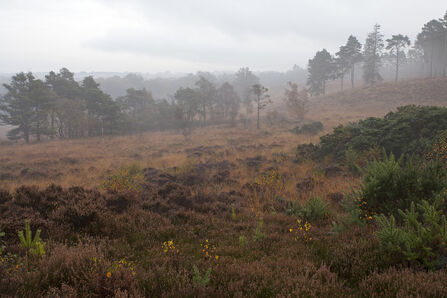
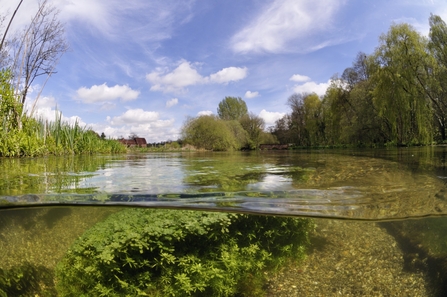
Here in Hampshire and the Isle of Wight, that role really matters. We live in one of the most nature-rich parts of England, from the New Forest and our internationally important chalk streams to the Solent’s wetlands, harbours and coast and the extraordinary landscapes of the Isle of Wight. These places face enormous pressures from development, pollution, water demand and climate change. They need a strong independent regulator prepared to stand up for them.
Nature isn't holding back growth

Nature is repeatedly presented as something that stands in the way of prosperity.  But this is entirely untrue.  We obviously need to keep saying it – nature is not a constraint on a successful economy. It is critical infrastructure for one.

Our economy depends on clean and plentiful water, healthy soils, pollinators, flood protection and a stable climate. Thriving landscapes support tourism and farming, improve our health and make places attractive to live, work and invest.

And as climate change accelerates, those natural assets become even more important for our economic resilience. Healthy wetlands, rivers, woodlands and soils hold water during drought, slow it down during floods, clean polluted water and air, store carbon and help crops and wildlife survive extreme conditions. 

At a time when we are seeing the very real impacts of climate change through wildfires and floods, when wildlife is already severely depleted, and when the public care more than ever about nature, weakening the regulator charged with protecting it makes no sense.

Opening the door to further destruction of nature would simply mean running down the assets on which future prosperity depends.

Weakening environmental protection doesn't make those problems disappear. It makes them more expensive.  Investment in nature, natural infrastructure and climate resilience will help support good growth – not hold it back. 

Regulation doesn't have to mean saying no

There is another myth we need to challenge: that Natural England exists chiefly to stop things happening.  It doesn't.

For protected European sites, Natural England provides expert advice, while decisions ultimately sit within a legal framework that allows mitigation and, in exceptional circumstances, overriding public-interest considerations.  Natural England isn't an all-powerful veto on development. It is nature's expert voice in a system built to balance different needs.

And at Hampshire & Isle of Wight Wildlife Trust, we know from experience that regulation and development don't have to be opponents.

Here in the Solent, we worked closely with Natural England to develop England's first nutrient neutrality scheme, finding a practical solution to one of the toughest conflicts between development and environmental protection. It helped unlock development while investing in nature recovery and reducing nutrient pollution.

We are also seeing Natural England modernise how it regulates. Through Earned Autonomy, trusted conservation practitioners like us can carry out work more efficiently, with less unnecessary paperwork, while keeping the environmental safeguards that matter.

Natural England itself is already pursuing reforms aimed at faster licensing, reduced administrative burden and more strategic, landscape-scale approaches. 

That is exactly how modern regulation should work: smarter, faster and more strategic, but no less effective.  If anything, we need more resource flowing to Natural England to help drive the investment in critical natural infrastructure that our economy needs. 

Independence and science matter

One of the most important points to make is about independence. 

Nature recovery takes decades. Political cycles last a few years.

Ministers and elected leaders must make political choices, but those decisions should be informed by an organisation capable of saying what the science tells us, what environmental law requires and what the long-term consequences of decisions will be.

Some advocates for abolition have argued that Natural England’s functions could be transferred into Defra itself.  But such a move would lose the rigour of independence and expose scientific and regulatory decisions to short-term political pressure, when nature recovery demands precisely the opposite: consistency, independence and a long-term view.

It is worth remembering that Parliament deliberately created independent environmental institutions because stewardship of nature requires insulation from short-term political pressure. 

Devolution should strengthen nature's voice, not weaken it

There was one part of Louise Haigh's CBI speech that is worth pointing out. She talked about devolving decisions that are intrinsic to places.  She also spoke positively about nature-based solutions, including restoring wetlands, managing whole catchments and working with the land, not against it. 

Devolution could give us a huge opportunity to make better decisions about places and to integrate nature fully into local growth plans, strategic development strategies and regional water councils. 

Here in Hampshire and the Solent, housing, water, transport, farming, flood resilience, climate adaptation and nature recovery are inseparable. Our chalk streams, the New Forest, the Solent coast, rivers, wetlands and woodlands aren't peripheral to our economy. They help sustain it.

But as new devolved structures take responsibility for more of the decisions shaping our future, nature needs a powerful seat at that table. Natural England's independent voice should be strengthened through devolution, not diminished by it.

And our own role as local Wildlife Trusts is equally important, with the knowledge, relationships and practical experience to turn plans into recovery on the ground.

Save Natural England

We have been here before – a depressing doom loop of deregulation.

This announcement would be the seventh review of environmental regulators in 16 years. Over that period environmental protections have been weakened, yet the promised economic transformation hasn't followed.  And meanwhile, nature has continued to decline.

We need to stop those wanting to silence the organisations trying to protect what's left.

Natural England protects our most important places for wildlife. It provides independent scientific expertise. It helps ensure environmental law is upheld.  And, as our own experience shows, it works with organisations like ours to find practical solutions that allow development and nature recovery to happen together.

We have already seen how regulation can become smarter, faster and more strategic without weakening environmental safeguards.  Natural England should be given the resources and confidence to do more of that, working with devolved authorities and local partners to solve problems earlier.  Then we can use devolution to connect nature recovery properly with housing, water, infrastructure and economic investment.

Nature needs a strong, independent Natural England to defend the places and wildlife that cannot defend themselves.  And it also needs organisations like Wildlife Trusts working alongside to turn regulation, evidence and ambition into practical recovery on the ground.

Abolishing or weakening Natural England would not remove the environmental challenges facing this country. It would simply remove one of the strongest independent voices trying to solve them. We need to save Natural England.  

More than 20,000 people have already added their voices to that call.  I am adding mine – please add yours.


Nature needs more protection, not less

Wildlife is already under huge pressure. This is not the time to weaken its independent voice.

We’re joining Wildlife Trusts across the country in calling on Government to protect Natural England and the independent expertise it provides for nature.

Sign the petition to Save Natural England