Pamber Forest Newsletter, October 2026

The quarterly newsletter from Pamber Forest Nature Reserve

Hot weather and drought persisted at Pamber Forest Nature Reserve this summer, with some extreme heatwaves. July was the driest month on record, with no rain recorded, and was also the hottest, with particularly high night-time temperatures.

Most of the summer was spent controlling bracken with volunteers, but many work parties had to be cancelled because it was simply too hot to be out in the sun. During the three-month period, a total of 118 work days were spent on site.

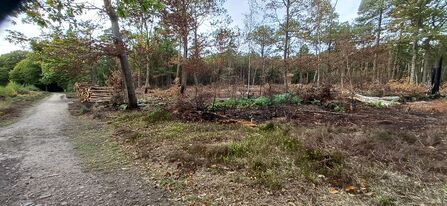
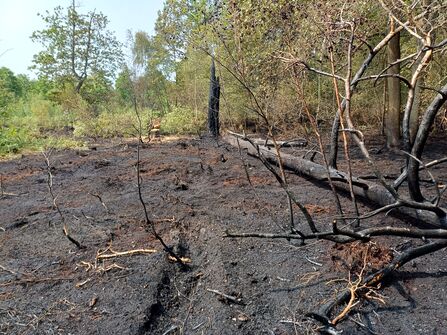
The drought led to the first wildfire recorded at Pamber Forest on 20 July. This burned an area of around one hectare of woodland. The fast response of the fire service prevented it from spreading onto the heathland, where nightjars were breeding.

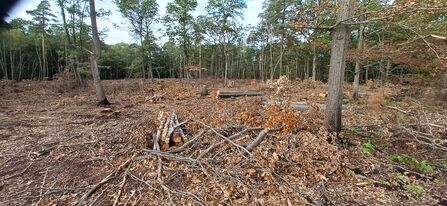
The fire has presented an opportunity to expand the heathland area. In September, the burned woodland was felled and, once the timber and brash have been removed, it will provide an opportunity for heather to germinate, adding another hectare of habitat for nightjars.
The hot weather led to some unusual sightings on the butterfly transect, with three clouded yellows, 22 painted ladies, 13 brown argus and seven small coppers recorded. These species are rarely seen in woodland. It has also been a record year for holly blue butterflies, with 190 recorded, compared with the previous best of 101. Other species that did well were brimstone, orange tip and marbled white.

It has been an outstanding summer for moths, particularly migrant species, with record numbers of vestal and small mottled willow. The vestal is usually yellow with a pink stripe, but in hot weather it can produce entirely pink individuals, which were common this year.

Colour forms of vestal moths

The migration was not confined to butterflies and moths; many other migratory insects were seen, including a lesser emperor dragonfly.

A surprising but special highlight over the past few months was the ringing of a tawny owl on 16 August. It flew into one of our mist nets in the middle of the morning, much to our surprise.

As well as the felling mentioned above, the estate team has also started felling two areas adjacent to major ride crossroads. This is designed to increase the amount of open space and benefit the invertebrates that use these areas.

A person holding a tawny owl gently in their hands, with a background of lush green foliage. The person is wearing a hoodie with partially visible text. The scene is outdoors on a wooded path.