Forest School training - A trainer's perspective

Trainee Assistant Training Officer, Ida Kubisz reflects on her first Forest School training season at Swanwick Nature Reserve, sharing how time in nature helps practitioners slow down, reconnect and understand the powerful impact of outdoor learning.

Whether you're a teacher, teaching assistant, nursery practitioner, SENCO, play worker or outdoor educator, Forest School training can provide the skills, confidence and inspiration to enrich learning through nature.

At Hampshire & Isle of Wight Wildlife Trust, we offer nationally recognised Forest School training courses designed to help practitioners bring the benefits of outdoor learning into their schools, nurseries and community settings. From introductory qualifications through to the widely recognised Level 3 Forest School Leader qualification, our courses combine practical woodland skills, child-centred learning approaches and immersive experiences in nature.

Based at Swanwick Nature Reserve, our Forest School training programmes give learners the opportunity to develop skills in tool use, fire lighting, risk management, environmental awareness and outdoor facilitation, whilst gaining a deeper understanding of the Forest School ethos and how it can support children's wellbeing, development and confidence.

But what is it really like to be part of a Forest School training journey?

Our new Trainee Assistant Training Officer, Ida, joined the training team earlier this year and has spent the spring and summer supporting learners through our Forest School courses. Here, Ida shares some reflections on her first few months in post and the powerful impact Forest School training can have on adults as well as children.

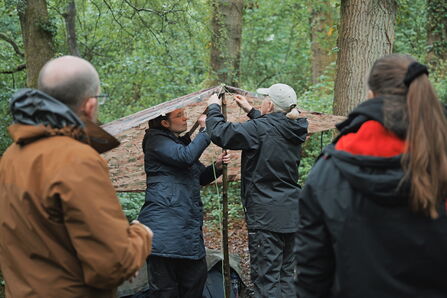
A member of Trust staff standing in front of outdoor shelters explaining to a group of adults

©Chris Fairhead 

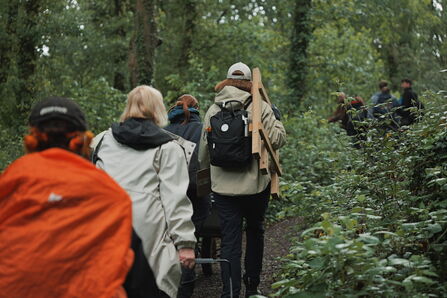
It’s been just under 4 months since I’ve joined the training team at Swanwick nature reserve. The spring and summer terms have been nothing short of a whirlwind with the completion of one level 3 Forest School training course quickly making way for 2 brand new cohorts joining us. Having completed the majority of the practical training days for both the level 2 and level 3 course, I’ve found myself reflecting on my experience. 

As a mighty training team of two, my colleague Dawn Preston and I find ourselves well and truly ‘stuck in’ with every aspect of the course. From welcoming our lovely trainees into the woods for the very first time, to being offered mud pies by giddy 4-year-olds in puddle suits at mentoring visits, we experience the highs and lows of the ‘Forest School journey’ many times over.

And it never gets old. 6 years post my training days, I can wholeheartedly say, the journey never ceases to amaze me. If I had to choose the most impactful thing I’ve witnessed as a trainee trainer, it’ll have to be watching adults receive the gift of time and space in the woods.

Let me explain…

I’ve come to observe that many of our trainees are nothing short of being superheroes. They arrive in the woods as parents, teachers, carers, assistant heads, SENCOs, play workers and countless other titles that carry a lot of weight.

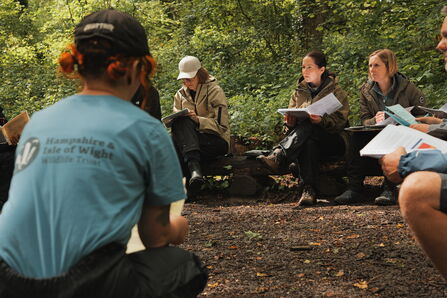
When we sit down at the fire circle for the first time, the excitement in the air is palpable. I feel as though at that moment in time, most of our trainees are expecting to delve into learning exciting new skills like fire lighting and tool use. Some may be keen to learn more about the Forest School ethos and how it can be applied to their setting. However, what they aren’t expecting is the opportunity to slow down, connect and just be.

On my very first level 3 course, I observed a mixture of responses when we invited the cohort to explore the woodland site and find a spot they’d be happy to stand or sit in for a period of time. We didn’t specify how long for or gave them much in the way of instructions at all. After fifteen minutes or so, we called everyone back to the fire circle and invited them to share how that felt. 

The responses were a mixture of initial confusion and restlessness especially as time ticked by. Some admitted the silence was unnerving at first, while others were grateful for the opportunity to sink into the woodland floor and listen to the rustle of the leaves above their heads. As we went around the circle, a common thread emerged: a sense of peace. In just fifteen minutes, the heavy titles and endless to-do lists they arrived with began to slip away, replaced by a collective realisation of how nice it is to pause and just ‘be’. 

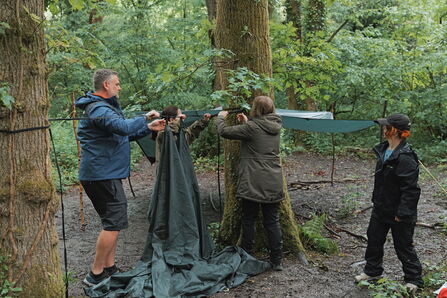
From that point on, we witness adults swinging freely in hammocks, searching for worms underneath log piles, making woodland shelters for teddy bears, getting their hands dirty in mud play, and accept countless other invitations to explore, be curious and give something new a go. 

For me, these moments are some of the most impactful on our courses because they really drive home the Forest School ethos and the monumental importance of gifting children time and space in a natural setting with zero expectations. 

Which Forest School Qualification Is Right For You?

Whether you're looking to support outdoor learning sessions or lead your own Forest School programme, we offer qualifications designed to suit different roles and levels of experience.

Level 2 Forest School Qualification

The Level 2 qualification is ideal for those who want to support and assist Forest School delivery.

This course is particularly suited to:

  • Teaching assistants
  • Early years practitioners
  • Play workers
  • Volunteers
  • Outdoor learning assistants
  • Support staff working alongside a Forest School Leader

Learners develop practical woodland skills, gain an understanding of the Forest School ethos and learn how to support safe, engaging and inclusive outdoor learning experiences.

Level 3 Forest School Leader Qualification

The Level 3 qualification is designed for those who want to plan, lead and deliver Forest School programmes independently.

This course is ideal for:

  • Teachers
  • Early years educators
  • Nursery managers
  • Outdoor learning practitioners
  • Community educators
  • Professionals looking to establish Forest School programmes

Learners develop leadership skills alongside practical competencies such as tool use, fire management, programme planning, risk assessment and reflective practice.

Successful completion enables practitioners to lead Forest School programmes within their own settings and inspire children to learn, grow and thrive through nature-based experiences.

Start Your Forest School Training Journey

Whether you're beginning your Forest School journey or looking to become a qualified Forest School Leader, Hampshire & Isle of Wight Wildlife Trust offers supportive, hands-on training designed to build confidence, skills and a lifelong connection with nature.

Our Forest School training courses are delivered by experienced practitioners in beautiful woodland settings, giving learners the opportunity to gain recognised qualifications whilst experiencing first-hand the transformative power of learning outdoors.

Find out more about our upcoming courses and qualifications by visiting our training pages:

Explore Forest School Training Courses