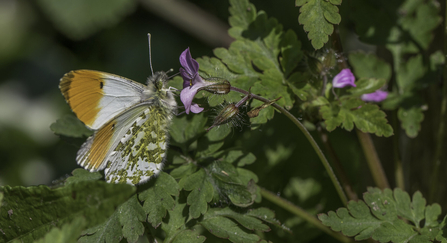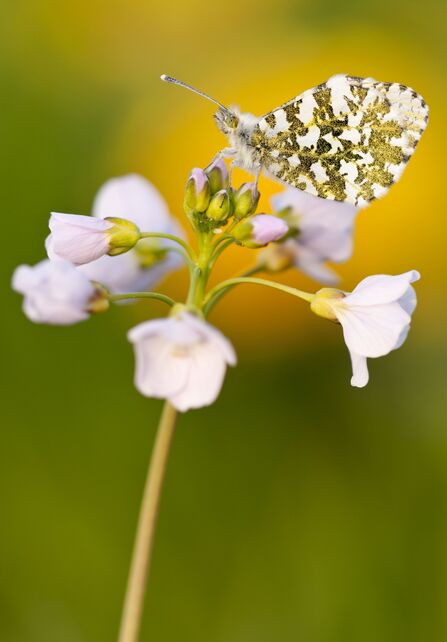

The orange tip butterfly (Anthocharis cardamines) is a short-lived but much-loved species, appearing from April into early summer. Males are instantly recognisable, with bright orange tips on their forewings, while females lack this colouring but share the same delicate white wings with intricate green marbling beneath. This underside, resembling a mosaic of leaf veins, provides excellent camouflage when the butterfly rests among grasses and wildflowers.
Orange tips can be found in damp meadows, woodland edges, riverbanks and gardens, and even roadside verges — anywhere their foodplants grow. Females lay their eggs on plants in the cabbage family, particularly cuckooflower and garlic mustard. Before laying, they carefully test each plant using sensory receptors in their feet, effectively ‘tasting’ it to ensure it can support the developing caterpillar. Each plant usually hosts just a single egg – a remarkable strategy that reduces competition, as the emerging caterpillars will eat not only leaves but also developing seed pods, and may even consume rival eggs. The eggs themselves are striking: laid pale cream, they turn bright orange within days, like tiny orange rockets hinting at the transformation to come.