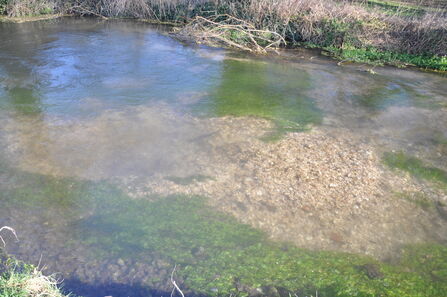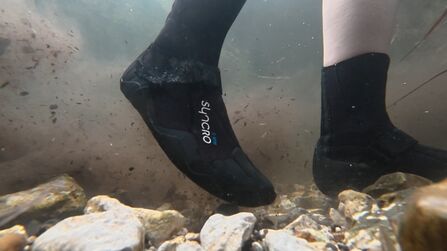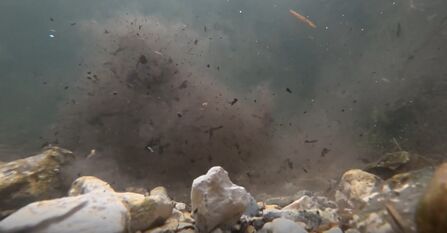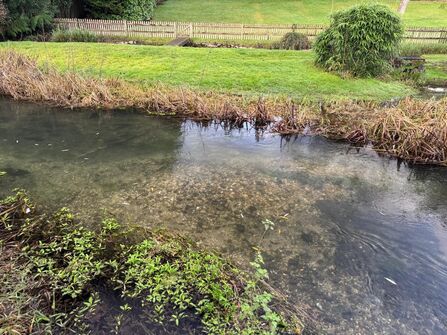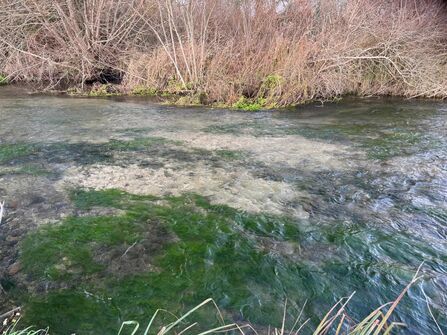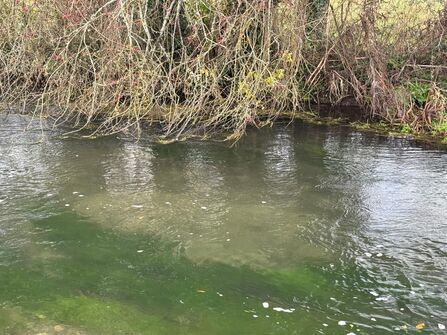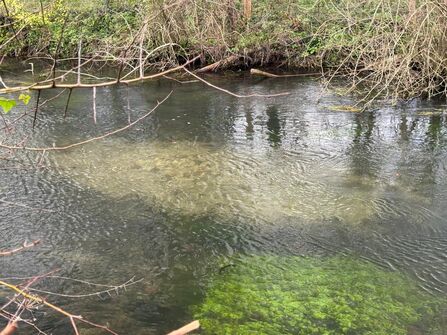
A redd is a shallow depression in the riverbed dug by a female salmon in clean gravel. Here she lays her eggs and covers them with more gravel for protection. However, redds are easily damaged and can be extremely difficult to spot.
The eggs remain hidden in the gravel throughout winter, hatching in spring. From now until May, the eggs are particularly vulnerable and at risk from disturbance, such as wading, wild swimming, paddling, dogs entering the water, or in-river works.
Even a single incident can crush the eggs or compact the gravel, cutting off the oxygen supply they need to survive. Just one disturbance can destroy up to 40% of the eggs in a redd, with repeated disturbance destroying even more.
The River Itchen is one of only six chalk streams in England that still supports wild Atlantic salmon, yet numbers have fallen dramatically. Just 133 adult salmon were recorded returning to spawn in 2022 - the lowest figure recorded since monitoring began in 1990 - and numbers of returning adults has remained low since with no signs of recovery. This figure represents only 20% of the Conservation Limit, the minimum number of eggs required to maintain the population at a biologically safe level.
Martin De Retuerto, Director of Nature Recovery at Hampshire & Isle of Wight Wildlife Trust said: "Many people don’t even realise redds are in the river. They can be very difficult to see, and unless you know exactly what you’re looking for, it’s all too easy to walk, paddle or swim right over them - without knowing that beneath your feet lie thousands of delicate Atlantic salmon eggs.
“Any activity that involves standing on, walking through or disturbing river gravels - whether for recreation, dog walking, angling access or river maintenance - can damage redds and destroy the eggs during the spawning season.
“People and dogs are being asked to keep to the riverbanks and stay out of the River Itchen from now until at least May. This small change in behaviour change could make the difference between survival and further decline of this iconic species.”
Winter is a critical time for Atlantic salmon. After months, and often years at sea, adult fish swim thousands of miles to return to the chalk streams where they were born, completing one of the most demanding life cycles in the natural world.
Research has shown that chalkstream salmon are genetically unique and irreplaceable. They play a vital role in the ecosystem, supporting insects, birds, mammals, and other river life. Numbers have plummeted due to a myriad of different factors including over-abstraction, habitat degradation, pollution, impacts on redds, in-stream barriers, climate change, and pressures associated within the marine environment.
Martin adds: “Freshly made redds can appear as lighter-coloured patches of gravel with a shallow dip and mound downstream, sometimes over 1 metre across. The recent heavy rainfall and high river flows can move gravels and obscure their location. This means eggs may still be present even when redds are not obvious.”
The warning comes from the Itchen Salmon Delivery Plan (ISDP), a coordinated initiative aimed at reversing the decline of this iconic species and protecting the health of the River Itchen, one of England’s most important chalk streams.
The ISDP is restoring habitats, improving water quality and flows, removing barriers to migration, and working with communities to give this endangered population the best possible chance of recovery. However, giving these salmon the best chance of recovery will rely on everyone doing their bit to support and protect them.
The ISDP brings together environmental organisations including Wessex Rivers Trust, Environment Agency, Hampshire & Isle of Wight Wildlife Trust, Natural England, Test & Itchen Association, WildFish, Wild Trout Trust, Southern Water, Itchen Navigation Preservation Trust and Friends of the Itchen Estuary.
Members of the public who see or suspect disturbance, pollution or damage to spawning habitat on the River Itchen, are advised to contact the Environment Agency’s 24/7 Environment Incident Hotline on 0800 80 70 60.
Find out more about the Itchen Salmon Development Plan here.
Find out more about the Trust's Save our Chalk Stream campaign here.