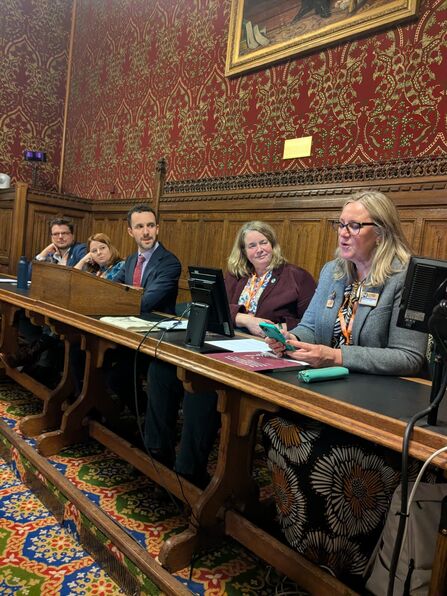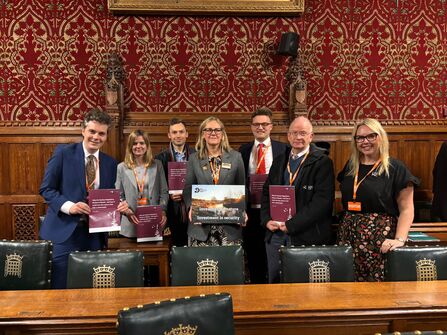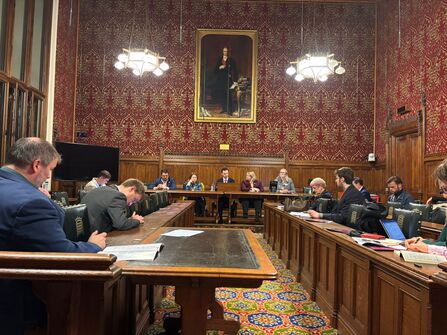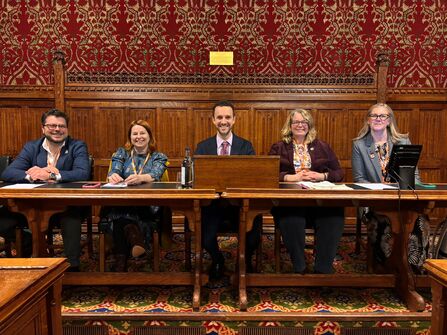

On 20th January the Wildlife Trusts, RSPB, the National Trust and Wildlife & Countryside Link held a parliamentary briefing on the risks to nature from the recently published Nuclear Regulatory Review, hosted by Chris Hinchliff MP.
I was pleased to give a speech as part of the panel, to highlight the inaccuracies, flawed analysis and misrepresentation of evidence in the Review - which has led to its recommendations to weaken nature protections.
The Prime Minister has welcomed the review and is keen to see it implemented quickly. He has also said he is minded to extend this deregulatory approach to other infrastructure sectors. This should worry us all.
This not yet policy, and we have a chance to influence this if we act now. You can sign our e-action in the link at the bottom of this blog.
Below is the text of my speech.
I want to focus on one simple but critical point: the Nuclear Regulatory Review is built on a flawed diagnosis. And when a problem is misdiagnosed, the wrong cure is prescribed.
"The Review claims that environmental regulation, particularly the Habitats Regulations and duties relating to Protected Landscapes, is a major cause of delay and cost in nuclear delivery, and should therefore be substantially changed. That claim does not stand up to scrutiny.
"We are already in a nature crisis - one of the most nature-depleted countries in the world, and well off track to meet many of our environmental targets by 2030. This is not just an environmental issue. It is an economic one. Continued loss of ecological function could damage UK GDP more severely than the Pandemic. Nature is critical infrastructure, underpinning food security, public health, flood protection, and climate resilience. Undermining it is not pro-growth. It is economically reckless.
"Yet the Government has chosen a different narrative.
"This Review fits an increasingly familiar storyline in which nature is turned into a convenient scapegoat for failures elsewhere in planning and infrastructure delivery. We saw this through last year’s Planning and Infrastructure Bill, and we see it again here.
"The Fingleton Review adopts developer talking points without testing them, misrepresents evidence, ignores expert input, and once again tries to pitch environmental protection against economic growth.
"New analysis published by the Wildlife Trusts shows that the description of environmental protections as “pointless gold-plating” and “unnecessary red tape” is based on misleading advice and factual inaccuracies. That matters, because these claims are now being used to justify rolling back long-established environmental law.
"The Prime Minister has said the Government accepts the principles of the Review, with an implementation plan due within three months and delivery within two years. He’s also hinted at extending this deregulatory approach to other infrastructure sectors. That should concern us all.
"The Wildlife Trusts report exposes major flaws in the Review, particularly in its treatment of Hinkley Point C, which appears to be the central case study.
"Nuclear projects are large, complex, and often sited in sensitive coastal and wetland environments. That is inherent to the technology, and it is precisely why strong environmental regulation exists.
"Hinkley sits beside one of the most highly protected estuaries in Europe and will abstract a swimming pool’s worth of water every second for around 70 years. Significant environmental impacts were always inevitable. That is not regulatory failure. It is the reality of the site.
"We have heard claims that £700 million was spent to save “a handful of fish”. That figure is wrong. The fish deterrent system cost around £50 million, just 0.1 per cent of the project’s £46 Billion estimated cost. Nearly £30 Billion in cost overruns have nothing to do with environmental regulation.
"Crucially, it was the developer, not regulators, who chose in 2017 to abandon the required deterrent system, triggering further assessments, permit changes, and a public inquiry. Those were self-inflicted delays – later blamed on nature.
"The Review also relies on deeply misleading ecological data, suggesting fractional fish deaths per year, while Environment Agency analysis indicates that up to 4.6 million adult fish could be killed annually without mitigation. Similar myths are repeated at Wylfa, wrongly blaming a single tern, when the real risk is to Wales’s most important tern colony.
"No environmental experts sat on the Review panel, despite the sweeping environmental conclusions it reaches. That lack of expertise is reflected in the errors we see throughout.
"Three recommendations are especially concerning. Recommendation 11 weakens the Habitats Regulations by removing the requirement for like-for-like compensation. Recommendation 12 would allow developers to offset unquantified damage with a one-off cash payment. Recommendation 19 weakens duties on local authorities to further the aims of National Parks and Protected Landscapes.
"Taken together, these proposals represent clear environmental regression. They allow developers to pay to damage irreplaceable habitats and undermine protections for our most valuable landscapes, directly cutting across the UK’s legal commitments to halt nature loss and restore biodiversity, including the pledge to protect 30 per cent of land for nature.
"The Office for Environmental Protection has warned that the UK is likely to miss seven out of ten nature targets, with planning reform cited as a key risk. The OEP is also clear that environmental regulations themselves are not the problem. The Habitats Regulations provide a robust, tried and tested method of balancing the needs of nature and development whilst protecting our most important environmental assets. When implemented well, they do not cause unnecessary delay. Protected species are a factor in just 3.3 per cent of planning appeals.
"We have shown how planning and nature can work hand in hand through our work in the Solent on nutrient neutrality, where housing has been delivered alongside nature restoration, reducing pollution, helping wildlife and supporting the economy. There is a better path, if nature is considered as a solution, as critical infrastructure, rather than a problem to be overcome.
"If adopted, these proposals will not create certainty or efficiency. They will weaken environmental law, increase legal risk, and destabilise the planning system. The real barriers to delivery lie in governance, financing, and project management, not bats, fish, or protected sites.
"We must not turn a nature crisis into a catastrophe on the basis of flawed evidence and false narratives. The Government should reject these proposals and end this false war with nature.