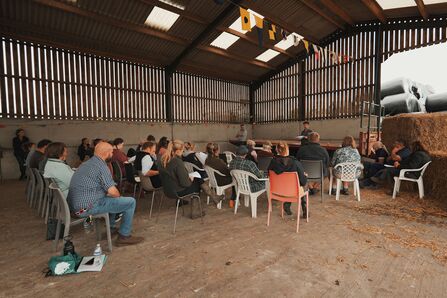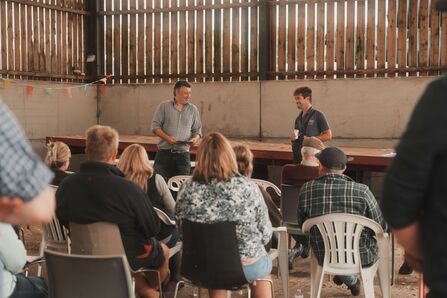
Nearly 200 New Forest commoners have gained practical skills and knowledge through a milestone series of livestock training events delivered by Hampshire and Isle of Wight Wildlife Trust, in partnership with Pilgrims vets.
Commoning is a practice that for centuries has helped shape the Forest’s landscape and sustain its internationally important habits.
The events programme is part of the charity’s ongoing work to support traditional commoning practices in the New Forest, reflecting the Trust’s long-standing commitment to both rural livelihoods and the protection of the internationally important habitats that commoning helps to sustain.
Rhys Morgan, Senior Land Advisor at Hampshire and Isle of Wight Wildlife Trust said: “It’s encouraging to see how many commoners want to learn, adapt, and sustain this centuries-old tradition in a changing landscape.
“These events are not just about practical guidance, but also community connection, confidence and keeping a way of life alive in the forest.”
The free training events brought together local commoners, from those new to the Forest to long-standing families with generations of grazing knowledge. the Head of the Commoners Defence Association also gave updates at the events. Each session provides a space for learning, shared wisdom, and practical advice rooted in the realities of managing livestock on the open forest. All took the opportunity to build their knowledge and confidence for grazing success in the modern New Forest landscape.
The first event, attended by 100 people, covered cattle care, breeding and fertility, what makes a good cow for the Forest, and the suitability of native breeds for grazing the unique open landscape. The second event, also led by local vet Alex Crook and attended by around 85 people, focused on cattle diseases.
Whilst an event for those interested in keeping pigs on the Open New Forest was also very well attended by New Forest commoners. The event provided very useful knowledge on the bi-laws for the forest and the requirements for the pigs to be allowed out for. Pannage (known as Common of Mast) when commoners’ pigs are marked and released onto the open forest to forage for fallen acorns, chestnuts and beech mast was also discussed. Pig ringing was also demonstrated to the group as this is a requirement for all pigs on the open forest.
Rhys adds: “I was pleased to see a good turnout for our first farmyard practical event, with people coming together to share knowledge.”
Tracé Cooper-Williams, Senior Nature Recovery Manager for the New Forest & Lower Test Valley at Hampshire and Isle of Wight Wildlife Trust adds: “This work builds on 25 years of the Trust’s involvement in the New Forest. By supporting the commoning community, we’re helping sustain a way of life that underpins the Forest’s unique ecology.
“Our role is to ensure they have the advice, connection, and encouragement they need to keep doing what they do best - caring for this remarkable landscape.
“Commoning is a living tradition, it continues to evolve thanks to the passion, knowledge, and care of the people who practise it.”
The programme is funded by the Verderers of the New Forest through the Higher Level Stewardship (HLS) scheme, in partnership with the New Forest National Park Authority and Forestry England, with contributions from the Commoners Defence Association (CDA). The events are supported by the HLS scheme and the New Forest Land Advice Service (NFLAS), and feature updates from the CDA, helping to clarify emerging issues such as the transition beyond the Basic Payment Scheme (BPS), a key concern for many graziers.
The programme complements the Trust’s wider strategy to strengthen commoning in the Forest through training, peer-to-peer knowledge exchange, and close collaboration with local landowners.
This work aligns with the Trust’s facilitation of the Southern Cluster. This three-year project involves 25 land managers and tenants across the southern parishes of the Forest, and focuses on collaborative approaches to regenerative farming and land management.
Together, these initiatives support both long-established and emerging generations of commoners, that benefit both rural livelihoods and the Forest’s internationally important habitats.
For more information or to book future events, contact Rhys Morgan at Hampshire and Isle of Wight Wildlife Trust: Rhys.Morgan@hiwwt.org.uk