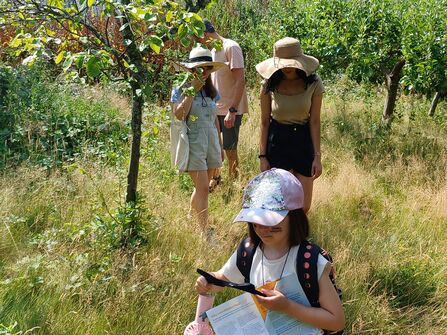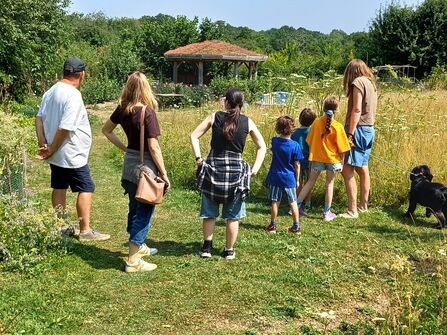
Supported by Hampshire & Isle of Wight Wildlife Trust, participants carried out two butterfly counts around the garden as part of the national Big Butterfly Count, a UK-wide citizen science project that helps build a picture of butterfly populations and the health of the environment.
Together, they recorded 24 butterflies from six species: nine small whites, one brimstone, five gatekeepers, one large white, five common blues and three meadow browns.
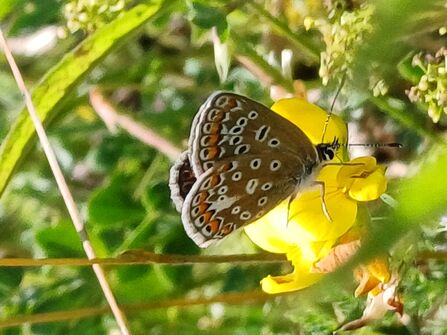
One of the most encouraging sightings was a female common blue butterfly feeding on bird's-foot trefoil. The delicate wildflower is the main caterpillar foodplant for common blue butterflies, making it essential for the species to breed successfully.
The counts demonstrate the vital role that well-managed green spaces can play in towns and villages, and how community gardens can provide essential habitat for butterflies, bees and other pollinators, even in built-up areas.
The sightings reflect the value of the garden's wildlife-friendly management. Several small meadow areas have been established where bird's-foot trefoil thrives alongside other nectar-rich plants, providing food and breeding habitat for butterflies, bees and other pollinators. It demonstrates how even relatively small green spaces can make an important contribution to local wildlife.
With support and guidance from Hampshire & Isle of Wight Wildlife Trust, Petersfield Community Garden has continued to enhance the site for both nature and people. Habitat management advice includes planting nectar-rich wildflowers, managing grass and meadow areas to increase floral diversity, and increasing biodiversity in the garden’s pond. Together, these steps create a richer, more wildlife-friendly garden that is increasingly important for pollinating insects and other wildlife.
Steve Bolton, Wilder Communities Officer at Hampshire & Isle of Wight Wildlife Trust said: “Petersfield Community Garden is a great example of what can be achieved when communities are supported to take action for nature. The garden is not only benefiting wildlife, but also inspiring people to connect with nature and play a part in its recovery.
“Butterflies are one of our most loved and recognisable insects, but many species are in decline. Events like this show how community action can play a real role in helping nature recover, while also connecting people with the wildlife on their doorstep.”
Sue Edberg, leader at Petersfield Community Garden, said: “'It’s a nice simple thing to do to build up a record of the garden as the years go by'.
The work reflects the Trust's Connected Communities approach, which recognises that by working together we can scale the transformation of landscapes and seascapes. Connection creates belonging, belonging sparks care, and care fuels action for nature. Community spaces such as Petersfield Community Garden play an important role in bringing people together to create positive change for wildlife where they live.
If you’d like to help wildlife and nature, the Trust’s Team Wilder initiative helps people take action for nature in their own communities. From creating wildlife-friendly gardens and volunteering, to joining surveys and supporting local projects, there are lots of ways to make a real difference.
Find out more about Team Wilder and how you can get involved here.
Petersfield Community Garden was established in 2013 by local people for the benefit of the Petersfield community. Over the past decade it has developed into a warm, welcoming space where volunteers of all ages grow flowers, fruit and vegetables together, learn and share skills, and enjoy the natural environment. Run by a friendly group of volunteers, the garden and orchard hosts events throughout the year and encourages people to get involved as much, or as little, as they like. Find out more on the Garden website here.