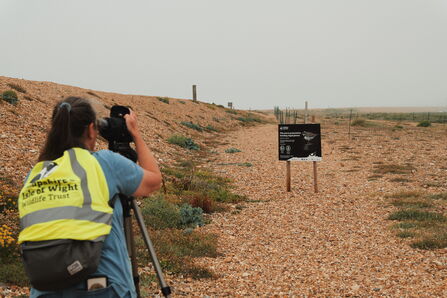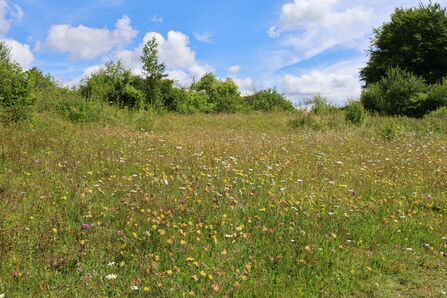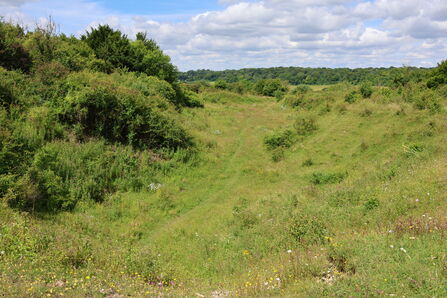
As part of the Species Recovery Programme, and matched by substantial contributions from project partners, Hampshire & Isle of Wight Wildlife Trust is working with partners on four projects to restore rare species and habitats on land, along the coast and in freshwater environments. These include work to support grey long-eared bats, white-clawed crayfish, beach nesting birds and species-rich chalk grassland.
Through the Government's ‘Wild Again: Restoring England's Wildlife’ initiative, more than 350 threatened species will benefit from the largest ever investment in recovering England's wildlife. Delivered by Natural England, the programme is investing £60 million in 130 projects that will help recover species ranging from mammals, birds and freshwater wildlife to rare plants, fungi and invertebrates. Through habitat restoration, captive breeding and species reintroductions, the projects will tackle habitat loss, safeguard fragile ecosystems such as ancient woodland and chalk streams, and help restore nature-rich landscapes across England.
Saving the grey long-eared bat
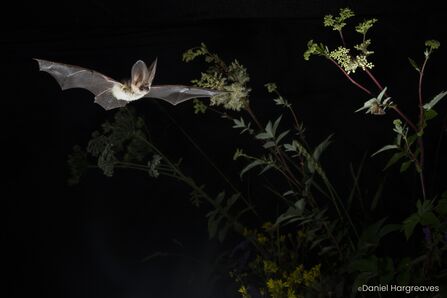
One project will help safeguard the grey long-eared bat (Plecotus austriacus), one of Britain's rarest mammals. Led by Bat Conservation Trust and delivered in partnership with organisations including Hampshire Bat Group, Isle of Wight Bat Group, National Trust and Wildlife Trusts across southern England, the project aims to protect existing colonies and help them grow.
Through work identifying roosts, improving foraging habitats and strengthening connections between important bat sites, the project will help the species survive and expand into new areas across Devon, Dorset, Somerset, the Isle of Wight and Hampshire.
The Trust will be offering advice to landowners in the New Forest and on the Isle of Wight to help improve habitats around important grey long-eared bat roosts. The work will include delivering targeted landowner advice for habitat management around key roost sites, contributing specialist bat ecological knowledge provision, producing habitat management plans and funding source facilitation for landowners and managers.
White-clawed crayfish
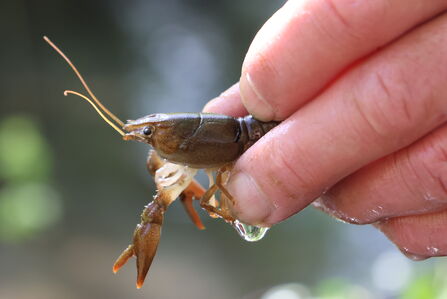
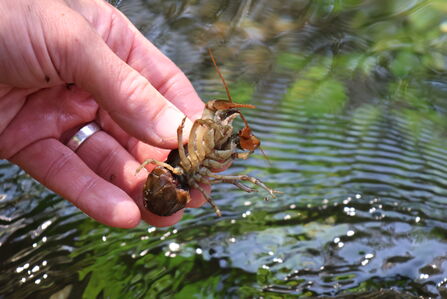
The Trust will be contributing to a national programme to restore and protect white-clawed crayfish, the UK's only native freshwater crayfish. White-clawed crayfish have suffered dramatic declines over recent decades due to pollution, habitat loss and most critically the spread of the invasive non-native signal crayfish, which carry the deadly ‘crayfish plague’.
The new project will bring together around 40 conservation organisations, researchers and environmental agencies in the largest coordinated recovery effort ever undertaken for the species. The Wildlife Trusts will oversee national programme coordination, governance and reporting, while regional partners including Hampshire & Isle of Wight Wildlife Trust will lead delivery on the ground.
Over the next three years, The Wildlife Trusts and partners will monitor surviving populations, assess catchment-scale threats and opportunities, and prioritise conservation action where it can have the greatest impact. This includes the breeding, rearing and release of juveniles, using a new mapping tool to identify safe havens where white-clawed crayfish can be protected from invasive species and disease.
The national project will also invest in cutting-edge scientific research, including studies into crayfish genetics, disease resistance, pathogens and cryogenic biobanking (the freezing of genetic material to provide a backstop in the event of a population crash). This work will help strengthen the long-term health and resilience of populations and provide an important evidence base for future conservation efforts.
Hampshire & Isle of Wight Wildlife Trust will build on its long-running work to recover white-clawed crayfish through the Southern Chalkstreams Project, supported by funding provided by Southern Water. For more than a decade, the Trust has monitored wild populations, supported captive rearing / breeding and river supplementations, looked to establish protected ark sites, and worked to restore the chalk stream habitats on which the species depends. This funding provides the Trust the opportunity to expand our captive rearing programmes, and give additional focus on the establishment of new ark sites, working in partnership with Marwell Wildlife in Hampshire, and The Wildheart Trust on the Isle of Wight.
The white clawed crayfish programme is supported by the Species Recovery Programme alongside match funding and in-kind contributions from project partners.