The chalkhill blue - A moment of midsummer magic

When wildflowers are in full bloom and butterflies are on the wing, our summer days are awash with spectacularly vibrant colours. But amongst the dazzle, the chalkhill blue (Polyommatus coridon) somehow steals the show. 

The warm open slopes of chalk downland are its stronghold and St Catherine’s Hill Nature Reserve provides the perfect habitat for this species to thrive. Visit at the height of summer and you may be lucky enough to witness a brief but breath-taking spectacle.

In search for the more elusive females, the males will congregate in extraordinary numbers lifting together to form a haze of blue above the grassland. 

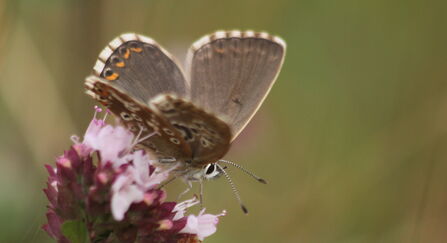
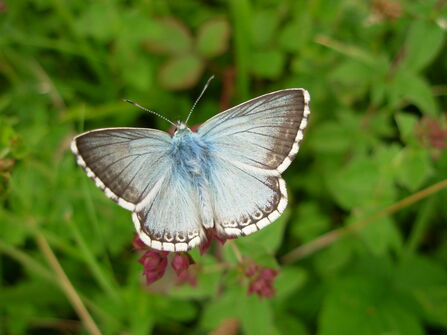
Despite the name, female chalkhill blues are chocolate brown, softly powdered with blue near the body. They spend less time flying than the more conspicuous silvery-blue males, remaining closer to shelter and shade. Despite a modest wingspan of just 4cm, the chalkhill blue is a relative giant of the blue butterfly world, only surpassed in size by the rare large blue.
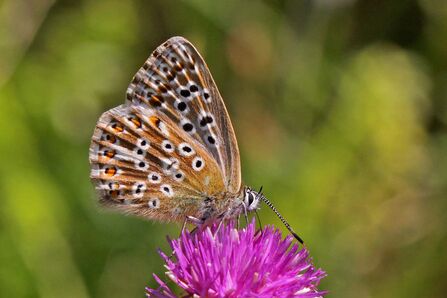
On the wing from July to September, its adulthood lasts just weeks. During this time, it flits, sipping nectar from purple flowers such as knapweeds and scabious fuelling a short bright season.

Its story, however, lasts only a year. With eggs laid in late summer on horseshoe vetch (the larval food plant) the larvae hatches in spring. After months spent feeding close to the ground, a chrysalis forms and in time, the butterfly emerges once again. The chalkhill blue may be a fleeting visitor, but its short life cycle is a reminder that some species are designed to arrive briefly, quietly and shine exactly when they are supposed to.