

Seagrass Meadow © Theo Vickers
Solent Seagrass Restoration Project
To work towards our vision of a wilder future and 30% of land and sea restored for nature Hampshire & Isle of Wight Wildlife Trust has joined forces with Boskalis Westminster to undertake a seagrass restoration project within the Solent.
We want to see seagrass habitats in the Solent restored towards their historical levels and for seagrass to be present in all locations that could support it. By restoring seagrass habitats, we will create a wilder Solent, supporting increased biodiversity and sustainable fisheries, promoting greater ecosystem services, cleaner water and creating a natural carbon solution to mitigate the effects of climate change.
The project is by the Trust’s Senior Marine Biologist, Dr Tim Ferrero and aims to identify the best methodology for restoring this hugely important marine habitat.
Hampshire & Isle of Wight Wildlife Trust has considerable experience of seagrass surveying, monitoring, and ecology, and over the past 4 years we've developed the skills and experience to establish the Trust as local lead for seagrass restoration within the Solent region. With an ongoing focus to refine our methodology to upscale seagrass restoration efforts.
This has been made possible thanks to our incredible volunteers, partners, and supporters like you.
Project updates 2021
June 2021
Whilst we have been visually assessing sites since April, this month we started surveying various seagrass beds across the Solent, monitoring how the plants are growing and when they start flowering.
July 2021
We are delighted that our project has been chosen to receive funds raised by players of People’s Postcode Lottery. The grant supports the first year of the project, which includes enabling us to purchase an underwater drone to capture footage of the seagrass.
August 2021
University of Portsmouth has joined us as academic partners on the project, providing scientific expertise in restoration ecology and blue carbon analysis. As partners on the project they will also be providing the facilities and laboratories at the Institute of Marine Sciences for the maturation and processing of seagrass seeds.
September 2021
We have been out in Langstone Harbour, collecting seagrass seed with help from volunteers from Boskalis Westminster, Marine Champions and students from University of Portsmouth Institute of Marine Science (IMS).
October 2021
We continued to collect seagrass seed this month. We estimate that we’ve collected around 25,000 seeds which are now at the facility at the Institute of Marine Sciences. The seeds will remain here whilst the plant essentially starts to rot away, and the seed is released. Once this has happened, we’ll be bagging them up 15 and 30 at a time, into small hessian bags called ‘seed bombs’, which will then be ready to go back out into the field as part of the restoration.
November 2021
Students at University of Portsmouth Institute of Marine Science (IMS) having been looking after our seagrass seed - collecting and separating it as it was released during the rotting stage. At the end of the month, we gathered in the laboratory, once again, helped by volunteers from Boskalis Westminster, our Marine Champions and students from IMS, to bag up the seed into the hessian seed bags and pouches ready for deployment.
December 2021
Joined by a team of volunteers from Boskalis Westminster, University of Portsmouth, Langstone Harbour Authority and the Isle of Wight Distillery, as well as some of our Marine Champions, we have undertaken our first intertidal harbour deployment. Together we planted 1025 seagrass seed bombs, containing over 21,000 seeds, out onto an area of the mudflats at Langstone Harbour. The seeds will now be monitored and hopefully in Spring 2022 we will see seagrass.
Project updates 2022
January 2022
We have launched the Solent Seagrass Champion volunteer role! Our Solent Seagrass Champions will assist with the monitoring, surveying and planting of seagrass across the Solent.
February 2022
Following the powerful storms which hit the UK in mid-February, we went to visit our seagrass deployment at Farlington Marshes with project partners, Boskalis Westminster and the University of Portsmouth. We are delighted to see that the plots are still there, and all the seagrass seed pods are still in place.
March 2022
Together with our Solent Seagrass Champions, students and partners we undertook our second and third seagrass deployments in the Solent – this time planting the seagrass species Zostera marina. We deployed 150 seagrass seed pods across a channel on an area of mudflats in Langstone Harbour and BBC Countryfile came to film the planting. We also deployed 625 seagrass seed pods in Seaview (Isle of Wight), bringing the total to ~40,000 seagrass seeds deployed in the Solent since December.
May 2022
We have seen seedling growth at Seaview on the Isle of Wight from a few of our hessian seed pods! This is fantastic news for the project as it is our first recorded success and we will continue to monitor these closely. We have also begun training our Solent Seagrass Champions in surveying and monitoring existing seagrass meadows across the Solent. This will help us to gain a greater understanding of their health and extent, as well as help to inform our future restoration work.
June 2022
We have continued to deliver seagrass survey training sessions for our volunteers on the early morning low spring tides, and are excited to now have 30 Solent Seagrass Champions trained in seagrass survey techniques.
Whilst we have been delivering the training, dedicated teams of our trained Seagrass Champions have been out across the Hampshire and Isle of Wight coastline surveying and monitoring for flowering shoots. The data collected will help to inform our next stage of restoration work in the Solent.
July 2022
We have been collecting Zostera marina seed through snorkelling and wading at Seaview on the Isle of Wight with a team of volunteers. The seeds we harvested are now in an aquarium tank at the University of Portsmouth to begin the rotting out process.
Whilst we have been collecting seed on the island, teams of trained Solent Seagrass Champions have continued surveying existing seagrass meadows and monitoring for developing seed on the Hampshire coastline.
August 2022
We’ve been conducting weekly checks on the Zostera marina seed we collected on the Isle of Wight as it goes through the rotting out process. As the seeds mature, they are being processed and separated from the dead organic matter. The cleaned-up seeds are then stored in a separate tank, with a constant flow through of seawater.
We’ve also had some exciting updates from our project partners. Emma Ward who works at the University of Portsmouth and is heavily involved in the Solent Seagrass Restoration Project, presented her PhD research which focuses on the carbon storage capacity of seagrass in the UK at the World Seagrass Conference in Maryland (USA). Read more here.
The Supercharging Seagrass Restoration hackathon has also launched! Over the next ten weeks are working with Engineering Masters students from Delft University of Technology in the Netherlands alongside our project partner Boskalis Westminster, to investigate the upscale potential of seagrass restoration in the Solent.
September 2022
We have been out at Farlington with Solent Seagrass Champion volunteers to collect Zostera noltei seed. This is for our next stage of seagrass restoration work in the harbours.
The seed is currently being stored in open-flow through tanks fed by sea water at the Institute of Marine Sciences as it goes through the process of ‘rotting out.’
October 2022
We undertook our third seagrass deployment of 2022! Joined by our dedicated team of Solent Seagrass Champions volunteers we packed 500 hessian seed pods with the 13,500 Zostera marina seeds we collected back in July, and planted these at low water at Seaview on the Isle of Wight. We’ll be monitoring this restoration plot in early spring for seedling growth.
We have also continued our Zostera noltei seed collection sessions at Farlington throughout October, finding that the seed development is delayed in comparison to 2021.
November 2022
We’ve been monitoring the Zostera noltei seed we collected as it goes through the rotting out process in tanks at the Institute of Marine Sciences.
Between September and November we have also been working closely with Engineering Masters students from Delft University of Technology in the Netherlands to investigate the upscale potential of seagrass restoration in the Solent. The students have designed and created a prototype for a unique seed sorting machine which will help to speed up our efforts to planting thousands of seagrass seeds along the Solent's coastline. Find out more here.
December 2022
We filtered and sorted through 5000 Zostera noltei seed with our wonderful Solent Seagrass Champion volunteers in the labs at the Institute of Marine Sciences. The clean seed is now being stored in mesh bags in seawater tanks, and we will be planting these on the mudflats at Farlington in the New Year!
Project updates 2023
January 2023
We have been conducting weekly checks on the Zostera noltei seed, ensuring the seeds remain clean and well aerated.
February 2023
We are delighted to welcome FatFace Foundation as our new partners on the Solent Seagrass Restoration Project! Their support will enable us to scale up our Seagrass Champion programme over the next three-five years, empowering even more people to engage with the project and play an active role in the restoration and protection of seagrass in the Solent
March 2023
Our first seagrass deployment of 2023 is complete! Joined by our project partners and supports we planted the Zostera noltei seed we collected towards the end of last year. Some of the seeds were planted into our hessian ‘ravioli’ seed pods, whilst others were used to trial a pioneering new method of planting called Dispenser Injection Seeding. This method involves filling caulking guns with a sediment/seed mixture which is then injected directly into the mudflat.
The two planting methods were trialled across three plots in Farlington. Half of these plots will have any algal growth removed by hand to monitor whether algal blooms in Langstone Harbour are a factor reducing seedling germination success.
You can watch the video of our deployment here.
April 2023
We have been out on the coastline training more of our wonderful Solent Seagrass Champion volunteers to survey and monitor existing seagrass meadows following the Seagrass-Watch methodology. We have led training sessions at Calshot and Chilling Beach on the Hampshire coastline and joined Project Seagrass for their training sessions at Ryde on the Isle of Wight. Over 45 Solent Seagrass Champions have now completed this training.
Dr Tim Ferrero represented the Solent Seagrass Restoration Project and Solent Seascape Project at the inaugural Solent Seagrass Symposium held at the Island Sailing Club in Cowes. He delivered a fantastic talk on our Zostera noltei restoration work to date.
We're also really excited to welcome Vp plc as our new supporters on the project!
June 2023
Our Solent Seagrass Champions have continued to survey our existing seagrass meadows across the Solent. We've also been monitoring our Zostera marina seed collection sites for seed development.
July 2023
We have been collecting Zostera marina seed through snorkelling and wading at Seaview on the Isle of Wight with a team of volunteers. The seeds we harvested are now in an aquarium tank at the University of Portsmouth.
We also welcomed Lauren Brown to the marine team as our Seagrass Restoration Summer Intern!
August 2023
We have been hard at work in the aquarium facilities at the University of Portsmouth, setting up two new larger indoor tanks for all the new seagrass collections, alongside working on constructing a brand-new seed separating system with the University of Portsmouth. This could replace our current method of sieving for seeds and significantly reduce the time and energy needed to collect all the mature seeds.
September 2023
We were delighted that the Solent Seagrass Restoration Project was chosen as Southampton International Boat Show’s charity of the Year! Over the course of the ten-day show, we educated and engaged the general public about the importance of seagrass habitats and our restoration work with the support of volunteers on our stand, and during talks on the main foredeck stage.
October 2023
The Zostera marina seed has been moved from the outdoor tanks and is now being stored in a cold, dark, high-salinity storage aquarium at the University of Portsmouth’s Institute of Marine Sciences. This is to put the seeds into a state of dormancy over the Winter months. The seeds will be planted in Spring 2024, with the hope that conditions will be better for seedling emergence and growth.
We have also been monitoring the intertidal Zostera beds in Langstone Harbour for flowering shoots and developing seed, and have found that this is late in comparison to 2022.
November 2023
By early November it was looking like we would finally have our volunteers out on the mudflats to help us with seed collection in Langstone Harbour. However, we sadly had to cancel these sessions due to health and safety concerns over the storms and sewage outflow events. The HIWWT marine team, Tim, Jenny and Ellie, still managed to head out on a few occasions with the appropriate PPE and collected a relatively good haul. These intertidal Zostera seeds will be used as part of germination trials.
On 24th November, we also sorted through the last of the seed from the “rotted out” Zostera marina plant material with the help of our wonderful Solent Seagrass Champion volunteers.
December 2023
We have been tending to and monitoring our Zostera marina and intertidal Zostera seed stored in the high-salinity storage aquarium. We have been doing regular water changes and picking out any seed affected by fungal growth.
Project updates 2024
January 2024
We’re continuing our seed husbandry and monitoring at the Institute of Marine Sciences to maintain seed viability.
February 2024
We completed our first seagrass surveys of 2024 across the Hampshire and Isle of Wight coastline, recording positive signs of growth of Zostera noltei and Zostera marina at existing seagrass meadow sites.
March 2024
On 1st March we invited our partners, supporters and volunteers to join us on World Seagrass Day to celebrate three years of the Solent Seagrass Restoration Project! It was a wonderful event, celebrating the successes of the project to date and the people who have made it possible.
Our MRes student, Uresha Rodrigo, has begun her laboratory studies at the Institute of Marine Sciences to investigate germination rates and different planting sediment mixes. Some of the seed she planted is already germinating and we will be monitoring its future growth and survival.
We also carried out two small-scale Zostera marina deployments using the Dispenser Injection Seeding method. One was at Seaview (Isle of Wight) as part of the Solent Seagrass Restoration Project, the other at Calshot (Hampshire) as part of the Solent Seascape Project.
April 2024
Between Monday 8th April and Wednesday 10th April, we successfully planted 40,000 seagrass seed on the set of low spring tides. 20,000 seed was planted at Seaview (Isle of Wight) as part of the Solent Seagrass Restoration Project and 20,000 seed was planted at Calshot (Hampshire) as part of the Solent Seascape Project.
May 2024
We have been out surveying the existing seagrass meadows at Seaview (Isle of Wight), Chilling Beach and Calshot (Hampshire) with our Solent Seagrass Champion volunteers. The data collected helps to inform our understanding of the health and condition of these habitats. We were also monitoring flowering shoots and developing seed, which will feed into our seed collection efforts in the summer.
June 2024
We’ve continued to survey the health and condition of existing seagrass meadows and been monitoring sites for seed development to help inform our next stage of restoration work. 32 Solent Seagrass Champion volunteers have completed the Seagrass-Watch training and contributed 77 hours to our survey efforts.
The marine team have also completed their BSAC Snorkel Guide course and have been out delivering talks and participating in engagement events across Hampshire and the Isle of Wight, educating our local communities about the wonders and importance of seagrass.
July 2024
We have had a very successful month of Zostera marina seed collection at Seaview (Isle of Wight) and Calshot (South Hampshire). 56 volunteers supported these efforts, contributing 220 hours to collect seed via wading and snorkelling. This is more than double the hours of volunteer effort in 2023.
We also welcomed Lauren Rawcliffe to the team, our Seagrass Restoration Summer Intern! Lauren has been helping us with our seed collection efforts, and will be supporting our work in the aquarium at the Institute of Marine Science.
August 2024
The collected Zostera marina seed has been going through the “rotting out process” at the Institute of Marine Science, University of Portsmouth. Our volunteers have been helping to sort and clean the seed from the indoor and outdoor aquarium tanks on a weekly basis.
We have also begun training our Solent Seagrass Champion volunteers to become Seagrass Survey Leaders. This will enable them to lead groups of volunteers out on the shore, helping us to increase engagement opportunities and our seagrass survey data collection in 2025.
We have monitoring existing meadows, our donor meadows and our trial restoration deployments. The Dispenser Injection Seeding method is proving more successful than the hessian seed pods.
September 2024
We have built a new seed storage system, based on a design from Project Seagrass. The seed will be stored in dark, cold, hypersaline conditions until the spring, when we will complete our next Solent deployments.
October 2024
Our Solent Seagrass Champion volunteers have been helping us to collect intertidal Zostera seed from the mudflats at Farlington for our next stage of restoration work. Over 60 hours have been volunteered this month and the seed is now in seawater tanks at the Institute of Marine Science.
The book 'Wild Seas, Wilder Cities' has also been launched by Pens of the Earth! This book is a collection of stories, poems, memoirs, environmental articles and illustrations and all proceeds will go towards our seagrass restoration efforts.
Project updates 2025
January
The majority of our seed collected in 2024 is currently in storage and maintained at high salinity and low temperatures, between 3-5°C, until spring. We perform regular checks and water changes which reduces the possibility of fungal growth, which can damage seed viability.
Towards the end of the month we invited our Seagrass Champions to join us in the lab for a seed sorting session. This seed was the intertidal Zostera from Farlington, which was collected back in October 2025.
With the help of 28 volunteers, all the seed has now been placed in storage, ready for planting in the spring.
February
This month we celebrated World Seagrass Day and 3 years of the Solent Seagrass Restoration Project. We are incredibly proud of everything we have achieved so far, and so grateful to all our partners, funders and volunteers for their valued support. To mark the occasion, we hosted a celebration event, which featured a series of seagrass talks, followed by nibbles and refreshments. In total, we had over 50 attendees –demonstrating the huge collaborative effort of our restoration work.
March
It’s time to plant! Spring is the best time for planting seed and with the help of our dedicated Seagrass Champions we completed two successful planting sessions at Calshot and Seaview. Following the success of the Dispenser Injection Seeding method used in previous years we opted for this method again. With the help of 20 volunteers we planted 30,000 Zostera marina seed at Calshot and 25,000 seed at Seaview. We will be monitoring these plots closely over the coming months and look forward to sharing an update soon.
April
This month we conducted monitoring sessions at Chilling Beach, Calshot and Seaview (Isle of Wight). These sessions were all led by our fantastic volunteer survey leaders, with the help of our seagrass champions. All our volunteers are trained in the Seagrass-Watch methodology and the data collected helps us understand the health and coverage of the seagrass meadows. In total, we logged 60 volunteer monitoring hours.
We also use these surveys to assess current seed development, which will inform our seed collection efforts in the summer.
May
We are continuing to grow our team of seagrass survey leaders and this month we enrolled 9 new Solent Seagrass Champions as survey leaders. Unfortunately, we had to cancel the final session due to poor weather conditions but are aiming to reschedule this over the coming months. Once completed, this will bring the total number of seagrass survey leaders to 15.
June
This month we kickstarted our 2025 seed collection at Seaview, Isle of Wight. As the seagrass at Seaview is intertidal, we were able to collect the seed by wading and snorkelling. Over 3 days we managed 6 collections, helped by 38 volunteers. We’re planning to head back in July for a second collection in order to reach our target of 120,000 seeds! The seed is now being processed in the aquarium at IMS will be ready for storage over the coming weeks.
July
We returned to Seaview, Isle of Wight on the 12th July for our second round of seed collection. Over 6 days we held 9 collection events and were joined by 53 seagrass champions. Between the 24th-29th we also collected seed at Calshot, running a total of 10 sessions in 6 days, with 80 volunteers – our highest recorded number so far! It was fantastic to see such huge volunteer participation and has helped us get even closer to our goal of 120,000 seeds. We also welcomed Eva – our new Seagrass Restoration Intern, to the team. You can read more about her experience of seed collection here.
August
After a busy month of seed collection, we spent the majority of August processing the seed at the aquarium. This requires the spathes to “rot down” and sink to the bottom of the storage tanks, a natural process which typically takes between 8-12 weeks. The seed is then sorted by manually separating the seed from the rest of the plant material. This is a very time consuming process, however, this year we are keeping the seed in trugs fitted with mesh. These act as a giant sieve and are helping speed up the seed sorting process.
September
At the beginning of September we had 20 seagrass champions join us in the lab for a seed sorting session. With 110 volunteer hours recorded, we sorted through 13,000 Zostera marina seed - the most we’ve ever sorted in a single session! The seed has now been transferred to our winter storage system, bringing our estimated amount to 180,000! We still have some seed left to process but will announce the final seed total in the coming weeks.
Monitoring of our restoration plots at Seaview and Calshot revealed positive signs of growth, with seedlings present at both sites. We also made a trip to Farlington to assess seed development stage, as we are planning our final seed collection events before winter, this time collecting intertidal Zostera.
We found a number of flowering shoots at stages 3 indicating it will soon be time to collect. We also performed monitoring surveys at Seaview and Chilling, led by our survey leaders.
We also had a special visit from the sustainability team at Boskalis, one of our major project funders. Their team participated in a monitoring session at Chilling, which was a great opportunity to showcase the work we’ve been doing and the impact of their continued, much valued support.
Finally, we also visited our restoration site on the River Hamble and are delighted to announce a number of the seeds we planted last year are now healthy, thriving plants! This is the first time seagrass has been recorded in the Hamble in nearly 100 years, after wasting disease caused a major decline in the 1930’s. You can read the full story here.
October 2025
On the 18th October, we swapped snorkelling and wading for mud pattens and body boards to begin our collection efforts of intertidal Zostera seed on the mudflats at Farlington, Hampshire. This was with the support of our brilliant Solent Seagrass Champion volunteers.
With a record volume of Zostera marina seed picked this summer, volunteer support in the laboratory was also essential over this period. In addition to the September seed sorting session, we held two more seed sorting events over October. This included a spooky, Halloween-themed event on October 31st.
Fancy dressed was strongly encouraged, with a prize awarded for the best costume. There were some fantastic outfits, as well as a spooky-marine themed quiz. A total of 3,688 seeds were counted and added to our storage system which brings the Zostera marina seed total volunteers sorted through to 25,000.
The total number of Zostera marina seed in storage is now over 190,000!
November 2025
Our seed collection efforts at Farlington continued throughout November, with volunteers contributing over 75 hours to collect 4000 intertidal Zostera seed. This is for our next stage of restoration work in the River Hamble.
The marine team also attended the second UK Seagrass Symposium in Cardiff with highlights including seagrass biodiversity and ecology, mapping and monitoring and on community engagement and cultural values.
Dr Tim Ferrero, Senior Specialist for Marine Conservation, also was invited to sit on a panel discussion about restoration science, practice and practical modelling.
December 2025
Weekly work continued in the aquarium at the Institute of Marine Science, including routine seed maintenance and water changes within the seed storage system. These activities ensured the seed remained healthy and viable throughout the winter months in preparation for spring planting.
To celebrate the end of a hugely successful year of marine engagement, education and restoration across the Solent, we also held a Volunteer Christmas Party on Saturday 6th December at the D-Day Museum in Portsmouth. It was fantastic to bring everyone together for marine quizzes, games, presentations, reflections and celebrations!
This year, our Marine and Solent Seagrass Champions collectively donated over 2,700 hours of their time—the equivalent of 386 days. This is an extraordinary achievement and has enabled us to accomplish so much together.
Project updates 2026
January 2026
We kicked off the year with a fantastic volunteer seed sorting session on the 16th January at the Institute of Marine Sciences. A team of 25 volunteers joined us in the lab to sort through intertidal Zostera material, helping prepare seed for storage ahead of spring planting. We sorted through and counted an additional 2,641 seeds, bringing our total intertidal Zostera seed count to 4,000!
We also enjoyed connecting with the community through a number of events. We delivered our annual Solent Seascape Project Winter Talk, sharing the latest updates on our seagrass restoration work, and hosted an Ocean Film Screening at The Garlic Farm on the Isle of Wight, sparking thoughtful conversations about sustainable fishing and the future of our seas.
February 2026
On the 27th February, we hosted our third annual World Seagrass Day celebration at FatFace HQ, bringing together volunteers, project partners, and supporters. The event featured talks on our seagrass restoration work and research into the historic extent of seagrass in the Solent. Our Director, Martin De Retuerto, also shared insights into our freshwater conservation work and its importance within the wider restoration landscape.
It was another fantastic opportunity to celebrate our progress, reflect on achievements over the past five years and look ahead to the exciting work still to come.
In February, we also joined the celebrations for the FatFace Foundation’s birthday with a seagrass stand at the Meridian Centre in Havant, engaging and educating the general public with our seagrass restoration work and amazing marine life we have in the Solent.
Our new interactive map also launched, helping boaters across the Solent protect seagrass. The map shows the locations of the known seagrass meadows, helping skippers to avoid anchoring on them and reducing risk to these precious habitats. You can find out more here: New Solent map helps boaters plan trips and reduce the risk of anchoring on rare seagrass habitats …
March 2026
March marked the start of our 2026 seagrass restoration, with the first seed deployments of the year taking place! On 19th March, 44,100 Zostera marina seeds were planted at our Seaview restoration site using the Dispenser Injection Seeding method, as part of the Solent Seagrass Restoration Project.
The following day, a further 44,100 Zostera marina seeds were planted at our Calshot restoration site with the support of 23 Solent Seagrass Champions as part of the Solent Seascape Project: Solent Seascape Project | Hampshire and Isle of Wight Wildlife Trust.
Alongside restoration activities, we began preparing for the busy survey season ahead. We delivered Seagrass Survey Leader refresher training at Chilling Beach for our 2024 cohort and welcomed 12 new volunteers to our Seagrass Survey Leader training programme at Calshot Activity Centre.
March also provided an exciting opportunity to share our work internationally. Tim and Ellie travelled to Boskalis Head Office in the Netherlands for a biodiversity-focused event, where the focus was firmly on seagrass. Organised by Boskalis Westminster, the session showcased our successful partnership and highlighted the ongoing achievements of the Solent Seagrass Restoration Project to colleagues from across the organisation.
April 2026
April was another milestone month for our restoration efforts. On 17th April, an additional 50,300 Zostera marina seeds were planted at Seaview, bringing the total to 94,400 seeds. This is more than three and a half times the number planted at Seaview in 2025, when 25,000 seeds were deployed.
The following day, 56,600 Zostera marina seeds were planted at Calshot with the support of 17 volunteers. Together with the March deployment, this brought the 2026 total at Calshot to 100,700 seeds, more than triple the 30,000 seeds planted there in 2025!
Volunteer involvement also increased substantially, with 108.5 volunteer hours contributed to planting at Calshot. This represents over three times the volunteer effort recorded in 2025, when 11 volunteers contributed a combined 33 hours.
3,950 intertidal Zostera seeds were also planted on the River Hamble on Thursday 16th April. These seeds were collected by volunteers at Farlington between October and November 2025.
May 2026
We continued to survey our seagrass meadows in May. Our Seagrass Survey Leaders led seed development surveys at both Calshot and Seaview, recording encouraging signs of flowering and seed production. These positive results gave us the green light to begin planning our Zostera marina seed collections in June.
We also monitored our restoration sites to assess the success of this year’s planting efforts, where we were delighted to spot early signs of seedling emergence! We will be back to these sites in August to continue the monitoring work.
June 2026
In June we started our Zostera marina collections, delivering 7 sessions at Seaview on the early morning and evening spring tides with our fantastic team of volunteers. We saw some incredible marine life in the meadow, including stalked jellyfish and shore crabs.
July 2026
We continued with our seed collection efforts in July, delivering an additional 12 sessions across Seaview and Calshot. This was both wading and snorkelling to collect the Zostera marina seeds.
We had over 550 hours of volunteer effort contributed across our summer seed collections in total, collecting well over 100,000 seed. We were delighted that our work also featured on National BBC Breakfast News and BBC South Today.
You can read more about our collections here.
We also welcomed our new Seagrass Restoration intern to the team, Diana Bonciu, who will be with the team for the next 6 months. Diana will be supporting with fieldwork, aquarium work and communications and engagement for the project.
FAQ
What is seagrass?
Seagrasses get their name from their green, grass-like leaves, which form extensive lush meadows (or beds) underwater, just like the grass we see in our fields. One of the reasons seagrasses are so special, is that they are the only fully marine flowering plants in the world. Seagrasses live, and reproduce in seawater, but are restricted to shallow coastal areas where there is enough sunlight for them to grow and thrive. Amazingly, seagrasses are estimated to have first evolved when dinosaurs still walked the earth, over 100 million years ago. Today, there are over 60 species of seagrass worldwide, five of which can be found here in the UK.
Why is seagrass so important?
Seagrasses are sometimes known as ecosystem engineers because they can profoundly change the environment in which they are found, creating unique habitats which become biodiversity hotspots for a wide range of wonderful marine wildlife. The long leaves of seagrass are home to all kinds of anemones, hydroids, sea-squirts, sea mats and different algal epiphytes. Seagrasses also stabilise and oxygenate the sediment they grow in, and slow down water currents, making an ideal habitat for juvenile and adult crabs, sea snails, cuttlefish, pipefish, and even seahorses.
Is seagrass different to seaweed?
Seagrasses are easily confused with seaweeds; whilst they are both plant-like and live on our shores, there are some key differences. Seaweeds cling onto the seafloor, often rocks or reef, with a ‘holdfast’ and transport nutrients directly from the water through their body. Whereas, because they are flowering vascular plants, seagrasses have an internal transport system for nutrients they take in through a root system based in seafloor sediment.
What is Blue Carbon?
Blue Carbon is the term used for carbon captured and stored by the world’s coastal and marine ecosystems. Blue carbon has a huge role to play in tackling the climate crisis, as oceans absorb 20-35% of human-made carbon emissions every year.
How can you get involved?
You can help support the project and the wider work of the Trust in a number of ways:


Latest news
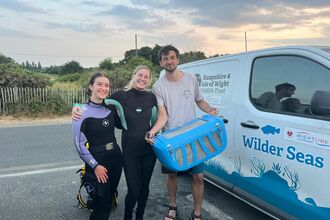
Collecting seagrass from the Solent - A hands on account
This summer Hampshire & Isle of Wight Wildlife Trust collected more than 100,000 seagrass seeds from underwater meadows in the…
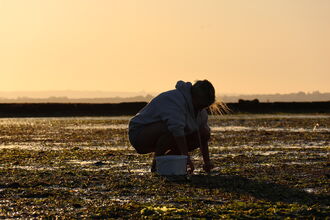
More than 100,000 seagrass seeds collected to restore one of the UK’s rarest marine habitats
Hampshire & Isle of Wight Wildlife Trust has collected more than 100,000 seagrass seeds from underwater meadows in the Solent,…
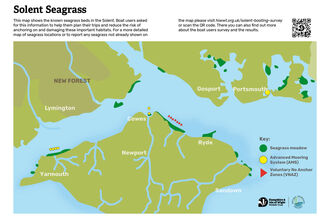
New Solent map helps boaters plan trips and reduce the risk of anchoring on rare seagrass habitats
A new interactive map is helping boaters across the Solent protect seagrass, one of the UK’s rarest marine habitats. It shows the…

Record breaking year for seagrass in the Solent
Rare underwater meadows returning to the Solent following a record-breaking year of seagrass restoration by Hampshire and Isle of Wight…
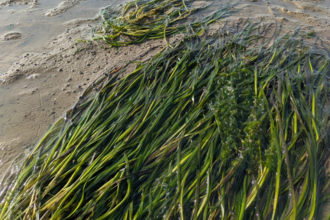
Rare habitat returns
Seagrass begins to flourish in the Hamble for the first time in almost 100 years.
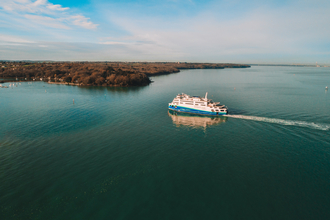
Wightlink: Helping to create a Wilder Wight
At Hampshire & Isle of Wight Wildlife Trust, we believe that nature’s recovery depends on strong partnerships.
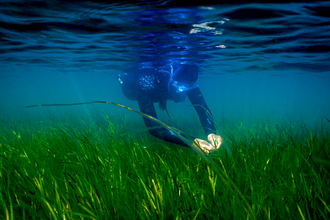
Collecting Seagrass Seed in the Solent
By Eva Walton, Seagrass Restoration Intern
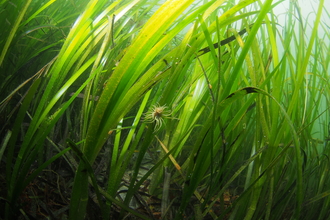
The unsung hero of our seas
By Ellie Parker, Marine Officer at Hampshire and Isle of Wight Wildlife Trust
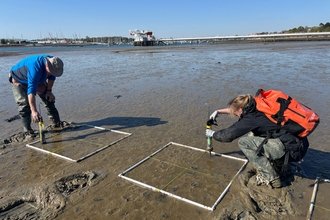
Seagrass returns to the River Hamble for the first time in decades
Pioneering project aims to restore lost underwater habitat, and one of the UK’s most threatened habitats


© Pens of the Earth
Wilder Cities, Wilder Seas
Supporters of the project, Pens of the Earth, have created a book called Wilder Cities, Wilder Seas, with proceeds donated to the Solent Seagrass Restoration Project.
